Wine corks are one of the easiest and most satisfying materials to upcycle into stylish, sustainable decor. With a bit of creativity, those small leftover corks can be transformed into chic, functional pieces that add warmth and character to any home.
This guide explores practical and design-forward wine cork upcycling projects, from statement decor to everyday home essentials, all crafted with approachable techniques and polished, modern style.
Chic Cork Crafts for Stylish Sustainable Decor
Reimagining wine corks as decor pieces is an easy way to blend sustainability with style. Cork is naturally warm, tactile, and slightly rustic, yet it can look surprisingly refined when combined with simple shapes and neutral palettes. With thoughtful design, you can turn casual cork collections into decor accents that feel intentional rather than crafty.
From hands-on work with clients, I have found that the most successful cork decor projects follow three rules: keep the color palette restrained, focus on clean geometric shapes, and pair cork with higher contrast materials such as glass, black metal, or matte white ceramics. This keeps the finished look modern instead of cluttered.
Before you start, give all corks a quick clean: brush off any debris, then lightly wipe with a cloth dampened in mild soap and water. Let them dry completely to avoid mold and to ensure any glue you use adheres properly.
- Clean, fully dry corks are essential for safe, long-lasting decor.
- Neutral pairings like white, black, or natural wood highlight cork’s texture.
- Minimalist shapes help these DIY pieces blend into modern interiors.
Simple DIY Cork Projects for Everyday Home Use
Everyday home items are some of the best uses for upcycled wine corks because they combine function with personality. Coasters, trivets, and small organizers give your corks a second life in ways you actually use every day. They also make thoughtful, low-waste gifts that feel personal rather than generic.
In my experience working on similar projects, simple, flat cork builds like coasters and trivets are ideal for beginners. They rely on just a few tools, usually a strong craft glue, a sharp knife, and a ruler, yet the finished pieces look neat enough to sit on a coffee table or dining table without looking homemade in a negative way.
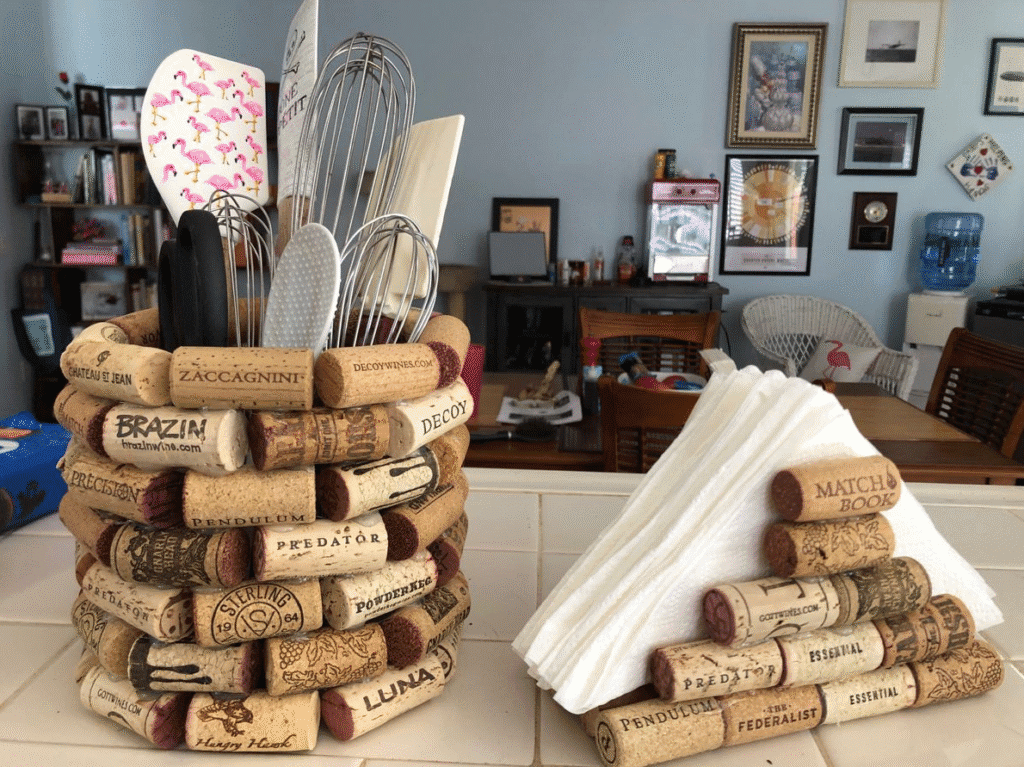
When crafting household items, always make sure the materials and finishes are safe for their intended use. For example, trivets should not be used directly over open flames, and any painted or sealed surfaces that contact food should use food-safe finishes whenever possible.
- Plan the exact dimensions before you start cutting or gluing.
- Use a cutting mat or scrap wood surface to protect your table.
- Choose glues that can handle light heat for projects used in the kitchen.
Creating Modern Cork Coasters and Trivets
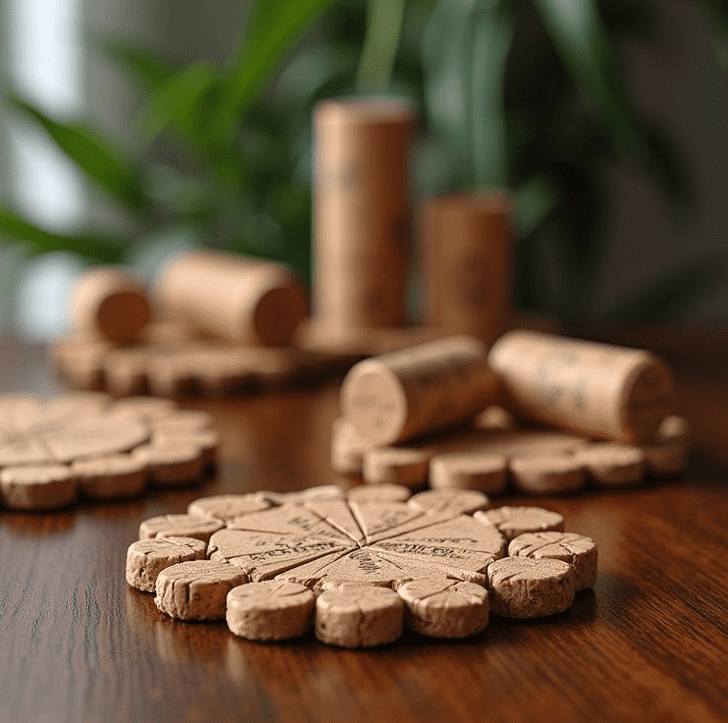
Cork coasters and trivets are classic wine cork upcycling projects, but thoughtful design can make them look modern and minimalist instead of kitschy. Consider geometric layouts like hexagons, grids, or herringbone patterns. Decide whether you prefer the rounded cork ends visible from the top, or a sliced, tile-like appearance created by cutting corks lengthwise.
From hands-on projects, I have found that slicing corks in half lengthwise creates a slim, tile-like profile that lays flatter, especially for trivets. Arrange these halves tightly together on a backing such as thin plywood, cork sheet, or a heat resistant silicone mat. This not only keeps the pattern stable but also helps protect surfaces from heat.
Cork is naturally heat resistant, but it has limits. It works very well for warm to moderately hot dishes that you can safely handle barehanded, but you should avoid placing extremely hot pots fresh from the stovetop directly from high-heat burners onto cork trivets for long periods, since scorching is possible.
For coasters:
- Standard size: about 4 inches (10 cm) square or round.
- Use full corks placed on end for a more textured, chunky look.
- Glue onto a cork sheet or wood disc, then trim edges for a clean finish.
For trivets:
- Aim for 7 to 9 inches (18 to 23 cm) across for everyday pots.
- Use halved corks arranged in tight patterns for better stability.
- Add felt pads underneath to prevent sliding on smooth surfaces.
Design tips:
- Alternate wine-stained cork ends with cleaner ones for visual interest.
- Add a thin leather or cotton hanging loop if you want to store them on a hook.
- Keep color accents subtle, like a painted edge in black, white, or brass.
Wall Art and Statement Pieces from Wine Corks
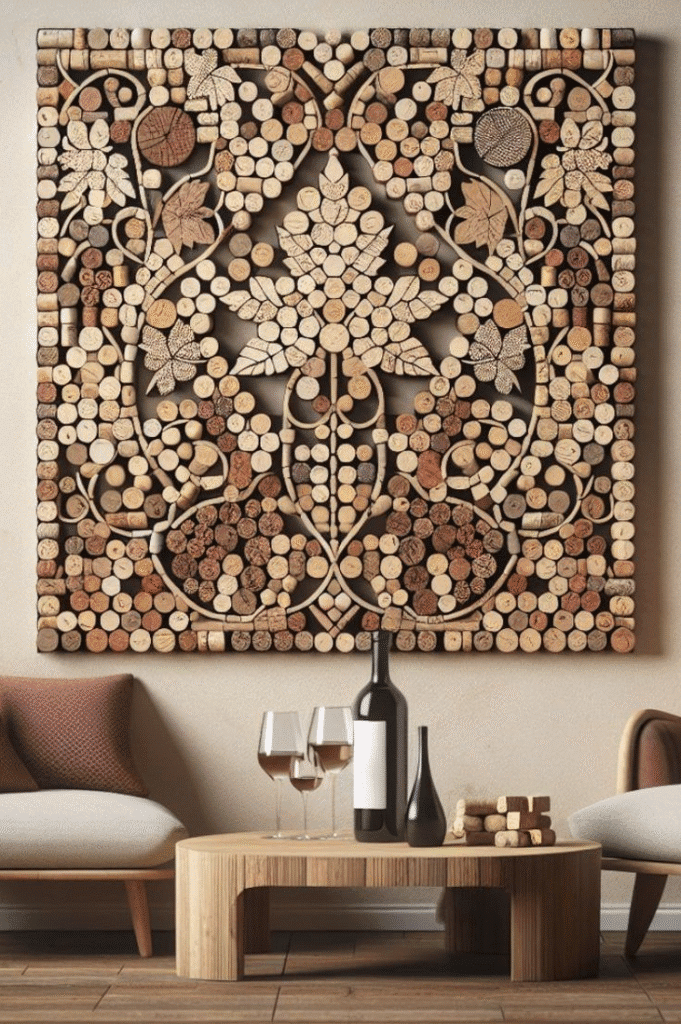
Wine cork wall art is one of the most impact-focused upcycling projects because it can cover substantial wall area and visually tie a space together. You can create a simple large rectangle filled with corks, a gradient pattern using darker and lighter corks, or even a stylized abstract design. The goal is to treat cork as a textural mosaic tile.
In my experience designing cork wall pieces, choosing a strong base is crucial. Lightweight plywood, MDF, or stretched canvas reinforced with a wood frame work well. Sketch your pattern directly onto the backing first. Then place corks loosely before gluing so you can adjust spacing and color distribution. This prevents awkward gaps or unbalanced sections.
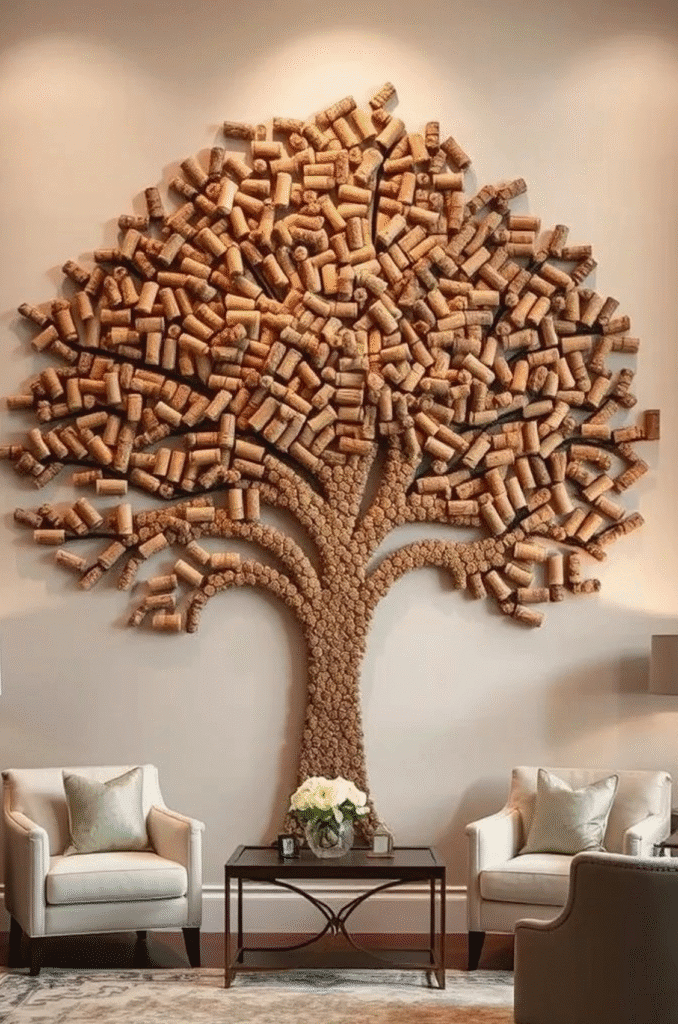
Because cork is naturally absorbent, be cautious with any paint or stain you apply. If you want a uniform color, spray seal the corks lightly first, allow them to dry thoroughly, then apply a thin coat of paint. Wall art should be kept away from high moisture areas like directly over bathtubs or in frequently steamy bathrooms to reduce the risk of warping or mold.
Design ideas:
- Monochrome cork wall with a painted frame for a gallery look.
- Chevron or herringbone layouts for a refined, tailored style.
- A subtle ombre design transitioning from darker to lighter corks.
Construction tips:
- Use a strong, clear-drying craft adhesive formulated for both wood and cork.
- Press corks tightly together to minimize visible gaps.
- Add hanging hardware strong enough for the finished weight.
Styling suggestions:
- Hang above a bar cart or dining console to create a cohesive wine corner.
- Pair with black and white prints to contrast the natural cork tones.
- Use indirect lighting such as wall washers or picture lights to highlight texture.
Cork Planters, Vases, and Green Touches
Cork pairs beautifully with greenery, making it ideal for mini planters, vase wraps, and natural centerpieces. Tiny cork planters are especially charming for air plants, dried stems, or small succulents that require minimal water. Because cork is porous and degradable, it is not suited for heavy, ongoing moisture, so focus on low water options.
Based on my past work with small plant styling, I recommend using real plants only if you can ensure proper drainage or extremely conservative watering. Drill a small cavity into the side or top of the cork, insert a bit of cactus soil or moss, and choose hardy air plants or tiny succulents. Remember that even drought tolerant plants can rot if the cork holds too much moisture, so water sparingly.
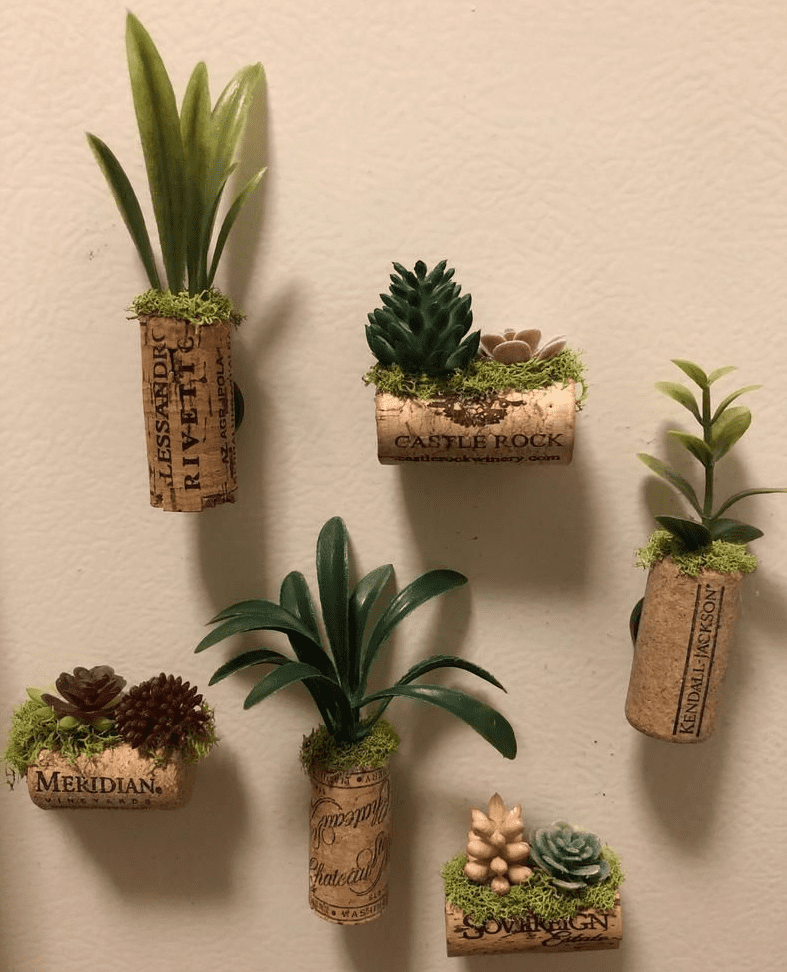
You can also use corks decoratively around larger vases and planters. Gluing corks vertically around a simple glass cylinder or terracotta pot transforms a plain vessel into something cozy and tactile. For safety, always keep any cork-decorated vase used with water in good condition, and dry it off after spills to prevent mold forming between corks.
Mini cork planters:
- Ideal for air plants and dried flowers.
- Drill shallow holes, not all the way through, for plant pockets.
- Attach a small magnet to the back for fridge gardens.
Cork-wrapped vases:
- Use straight-sided vases for easier alignment.
- Glue corks vertically in tight rows for a clean, modern banded look.
- Seal lightly with a clear, non-yellowing spray if they will be near splashes.
Green styling:
- Cluster three to five cork-wrapped vases in different heights.
- Mix in fresh herbs for a kitchen windowsill display.
- Combine with linen table runners and neutral ceramics for a natural tablescape.
Wine Cork Organizers for Desks and Entryways
Wine corks can be cleverly reworked into organizers that keep everyday items in check without sacrificing aesthetics. Because cork is soft yet sturdy, it works well for pin boards, key holders, and small object trays. These pieces are especially useful in entryways, offices, and craft rooms where small clutter tends to gather.
In my experience organizing small spaces, cork-based catchalls and key holders encourage consistent habits because they are visually inviting and tactile. For a minimal key rack, for instance, you can screw small hooks into a row of corks attached to a wooden backing. The cork softens the look of the metal hardware while keeping it functional.
Be mindful of load-bearing limits. Cork alone is not strong enough to directly support heavy items like large bags, so for wall pieces, always pair it with a robust backing board and secure wall anchors. Keep heavier storage solutions closer to the floor or anchored into studs where possible.
Desk organizers:
- Cut corks in half lengthwise and glue them around simple boxes or pen cups.
- Use a cork tile surface as a pin board for notes and inspiration images.
- Add divided trays for paper clips, USB drives, and small tools.
Entryway ideas:
- Create a cork and hook strip for keys and light accessories.
- Use a shallow cork-lined tray for coins, sunglasses, and mail.
- Pair cork with dark wood or metal frames for a more refined aesthetic.
Practical notes:
- Test adhesives before final assembly to ensure strong bonds.
- Avoid loading cork organizers with heavy or sharp objects that could deform them.
- Place felt pads underneath cork trays to protect delicate surfaces.
Stylish Cork Accessories and Personal Items
Wine corks can also be upcycled into wearable or portable accessories that subtly show off your sustainable creativity. Items like keychains, bag charms, and simple jewelry can look surprisingly chic if you keep the designs clean and avoid overdecorating. Cork is light, which makes it comfortable to carry and wear.
From hands-on work with clients interested in eco friendly gifts, I have found that minimalist cork accessories are more frequently used and appreciated than those with overly busy embellishment. A single cork keychain with a polished metal ring, for example, feels functional and modern. Pairing cork beads or slices with metal or leather also creates a balanced, grown-up look.
When creating wearable pieces, prioritize safety and durability. Ensure that all metal components are smooth and securely attached. For jewelry that comes into direct contact with skin, choose hypoallergenic findings such as stainless steel, sterling silver, or nickel free options to reduce irritation risk.
Keychains and bag charms:
- Screw a small eye hook into one end of the cork.
- Attach to a sturdy keyring or lobster clasp.
- Optionally, burn or stamp initials or a short word onto the cork.
Jewelry ideas:
- Slice corks into thin discs to use as beads or pendants.
- Combine cork discs with metal spacers on a bracelet or necklace.
- Keep designs simple in neutral tones for everyday wear.
Finishing touches:
- Lightly sand cut edges for a smoother, more professional feel.
- If desired, seal cork surfaces with a matte clear coat to resist dirt.
- Package finished accessories in small fabric bags or kraft boxes for gifting.
Seasonal and Party Decor with Wine Corks
Corks are ideal for seasonal crafts and party decor because they offer a cohesive look that works across different color schemes and themes. They can easily transform into name card holders, garlands, wreaths, or table accents that signal celebration without relying on disposable plastic decor. With careful storage, many of these pieces can be reused year after year.
Based on real-world testing for events and small celebrations, cork place card holders are both practical and quick to assemble. Simply cut a thin slit across the top of a cork to hold a name card or menu. For stability, shave a small flat section along one side so the cork rests securely without rolling. This simple touch can elevate even a casual dinner party.
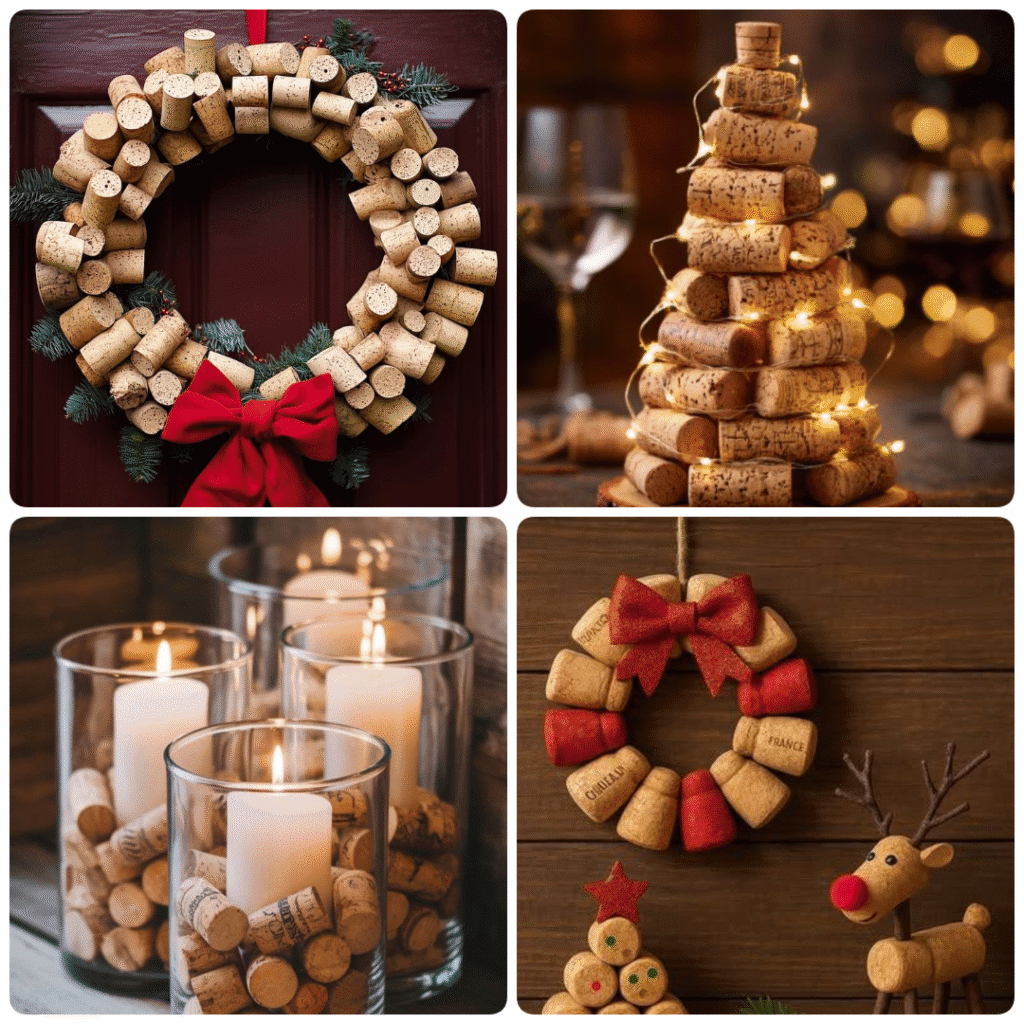
When using corks around candles, always pay attention to fire safety. Cork is flammable, so keep it a safe distance from open flames. Use glass candle holders or hurricane covers, and ensure any cork wreaths or garlands are positioned well outside the reach of the flame. Never leave candles unattended, especially around natural materials.
Table decor:
- Cork place card holders for formal dinners or weddings.
- Mini cork bundles tied with twine or ribbon as napkin rings.
- Cork-filled glass bowls as centerpieces paired with greenery or fairy lights.
Seasonal projects:
- Cork wreaths for doors, using a foam or wire base.
- Cork ornaments for holiday trees, labeled with memorable dates or wine names.
- Painted cork garlands for mantels or shelves.
Safety and practicality:
- Keep cork pieces at least several inches from open flames.
- Store seasonal cork decor in dry, ventilated containers.
- Refresh pieces periodically by replacing cracked or crumbling corks.
Tools, Techniques, and Finishing Tips for Professional Results
Even the most creative wine cork ideas rely on solid basic techniques to look polished rather than improvised. Fortunately, you do not need an advanced workshop to get professional results. A small set of sharp tools, the right adhesives, and a bit of patience go a long way in cork upcycling projects.
In my experience working on a variety of cork builds, clean cutting and consistent spacing make the biggest visual difference. Always use a sharp craft knife or a fine-toothed saw when cutting corks. Dull blades crush and tear cork, which leads to uneven edges and gaps. A cutting mat or scrap board is worth keeping under your work to protect surfaces and stabilize your cuts.
Finishing steps can elevate your project from “DIY” to “designer.” Light sanding, careful sealing where appropriate, and thoughtful color accents are usually the final touches that make cork projects feel at home in stylish, sustainable interiors. For items that see frequent handling, such as coasters and keychains, consider a light protective finish to extend their life.
Essential tools:
- Sharp craft knife or small handsaw for clean cuts.
- Cutting mat and metal ruler for straight, safe cuts.
- Strong craft adhesive compatible with wood and cork.
Helpful techniques:
- Dry fit pieces first before gluing to refine layout.
- Use clamps or heavy books to press glued corks flat as they dry.
- Wipe away excess glue immediately for a cleaner finish.
Finishing options:
- Light sanding with fine-grit paper on cut edges.
- Matte clear sealer for higher use items exposed to moisture.
- Subtle accents like painted edges or minimal wood frames to refine the look.
Conclusion: Bringing Chic Sustainability into Everyday Living
Upcycling wine corks into stylish decor and useful home items offers a simple, satisfying way to bring sustainability into everyday life. These small projects transform what would otherwise be waste into textural, warm, and modern pieces that complement refined interiors rather than clutter them.
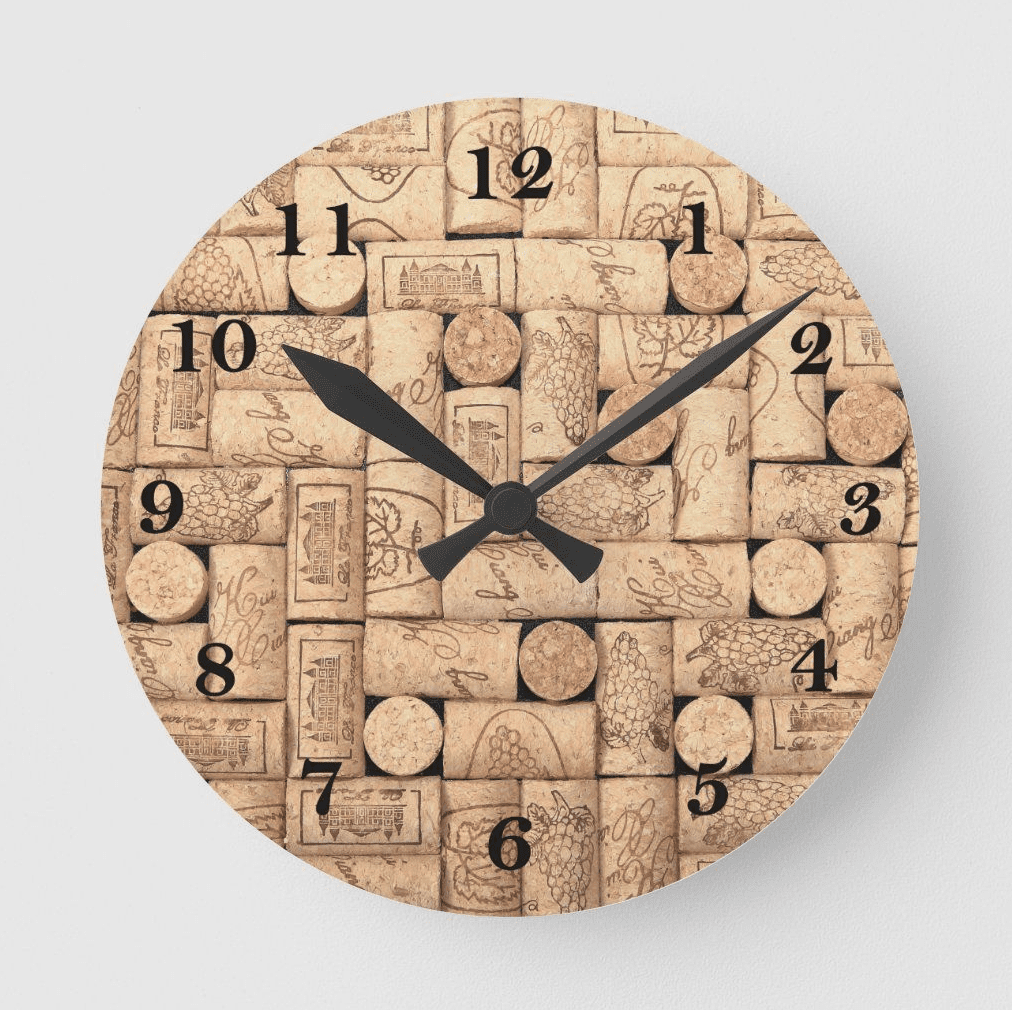
By focusing on clean shapes, practical function, and thoughtful finishing, you can create coasters, wall art, organizers, planters, and accessories that reflect your taste while reducing waste. From my experience working on cork projects with clients and in my own spaces, the most loved pieces are the ones that integrate seamlessly into daily routines: the trivet you reach for every night, the key holder you use every morning, the cork-wrapped vase you keep on your table. With a small collection of tools and a bit of intention, every empty bottle can be the start of your next stylish DIY upcycling project.

Maira Lindey is a home decor enthusiast who loves transforming ordinary spaces into warm, stylish havens. Through her writing, she shares simple, creative ideas that help people make their homes both beautiful and comfortable. Her approach combines aesthetic charm with practical solutions for everyday living.
With years of experience experimenting with colors, textures, and layouts, Maira enjoys guiding readers to express their personality through home design. She believes that even small changes can have a big impact, and she focuses on tips that are easy to implement without overwhelming the space or the budget.
Beyond decorating, Maira finds inspiration in nature, art, and everyday life. She encourages her readers to embrace creativity and make spaces that feel uniquely theirs, blending functionality with style in ways that are both inviting and livable.