Bedroom wall art has the power to transform a plain room into a personal sanctuary. With the right pieces, you can anchor your style, bring in color, and make even a small space feel thoughtfully designed.
In this guide, you will find bedroom wall art ideas for modern minimalist spaces and bold eclectic rooms, along with practical tips on scale, placement, and styling. The goal is to help you curate walls that reflect your personality while keeping the room calm, cohesive, and deeply inviting.
Modern Minimalist Bedroom Wall Art Inspiration
Minimalist bedroom wall art focuses on clean lines, limited color palettes, and a restful mood. The aim is not to leave your walls bare, but to be intentional with every piece you hang. Stick to two or three core colors that echo your bedding or rug so the art feels integrated with the rest of the room. Neutral tones, soft earthy shades, and black-and-white art often work beautifully in modern minimalist bedrooms because they support relaxation rather than overstimulation.
From hands-on work with clients, I have found that scale matters more than quantity in minimalist spaces. A single oversized print or a diptych above the bed usually looks more refined than a cluster of small frames. As a guideline, art above a queen or king headboard typically looks balanced when it is about two thirds the width of the bed. Hang the center of the piece around 57 to 60 inches from the floor, adjusting slightly based on your own height and headboard height.
Textures are a subtle but powerful tool in minimalist wall decor. Instead of adding more patterns, consider pieces that have depth and surface interest, such as linen-backed frames, raw-edge canvases, or sculptural wall panels. In my experience working on minimalist remodels, a simple monochrome line drawing in a wood frame with a deep mat can feel far richer than a busy print, simply because the materials and proportions are so well considered.
Soft Neutrals and Serene Abstracts
Soft neutral wall art instantly supports a tranquil bedroom atmosphere. Think of creamy beiges, warm whites, gentle taupes, and muted grays layered in abstract forms. These colors are known to feel less stimulating for most people, which can be helpful when you want the room to promote rest and recovery. Abstract pieces in these tones allow your eye to rest without getting caught in literal imagery.
Watercolor-style abstracts, cloudlike brush strokes, and blurred landscapes work especially well above the bed or across from it, where your eye naturally lands as you unwind. Pair these with light wood frames, white mats, or slim black frames, depending on whether you want the room to feel airy or grounded. In my experience specifying art packages for bedroom projects, neutral abstracts are some of the most versatile pieces, because they can shift with changing bedding, curtains, and rugs over time.
To keep neutral art from feeling flat, pay attention to layering and contrast. You can:
- Choose two coordinating abstract prints with slightly different values, such as one darker and one lighter.
- Mix matte and subtly glossy finishes to add dimension without creating glare.
- Use frames that add a small contrast, like black frames on pale art in an otherwise light room.
Based on real-world testing in various lighting conditions, neutral abstract pieces tend to look best under warm white bulbs in the 2700K to 3000K range, which prevent the artwork from feeling too cold or clinical.
Black and White Photography for Modern Edge
Black and white photography is one of the easiest ways to introduce modern sophistication without overwhelming a bedroom. Because there is no color, the images can be bold while still fitting a minimalist palette. Architectural photos, quiet street scenes, nature close-ups, or soft portraits can all work, provided they match the mood you want for the space. For a calming effect, choose imagery with open space, soft focus, or gentle movement rather than high-drama action scenes.
From hands-on projects, I have found that a series of two or three black-and-white prints hung in a straight line can visually stretch a smaller room. When spacing multiple frames, aim for 2 to 3 inches between frames for a clean gallery look above a dresser or long console. If you are hanging a single large photograph over the bed, check that there is at least 6 to 10 inches of space between the bottom of the frame and the top of the headboard to avoid a crowded feeling.
Matting and framing make a noticeable difference in the overall impression of photographic art. A white mat in a black frame can feel crisp and graphic, while a matless print in a slim metal frame offers a sleek, almost gallery-like aesthetic. Based on my past work with clients who like to change their art seasonally, I often recommend frames with easy-open backs so you can swap prints without damaging the walls or the frames.
Sculptural and Textured Wall Pieces
Sculptural and textured wall decor adds depth to a minimalist bedroom without relying on color or pattern. Think relief panels, carved wood pieces, woven wall hangings, or even clusters of ceramic forms arranged like a constellation. In a space that already has smooth surfaces like painted drywall, glass, and metal, a single textural piece can instantly warm the room and make it feel more tactile and lived in.
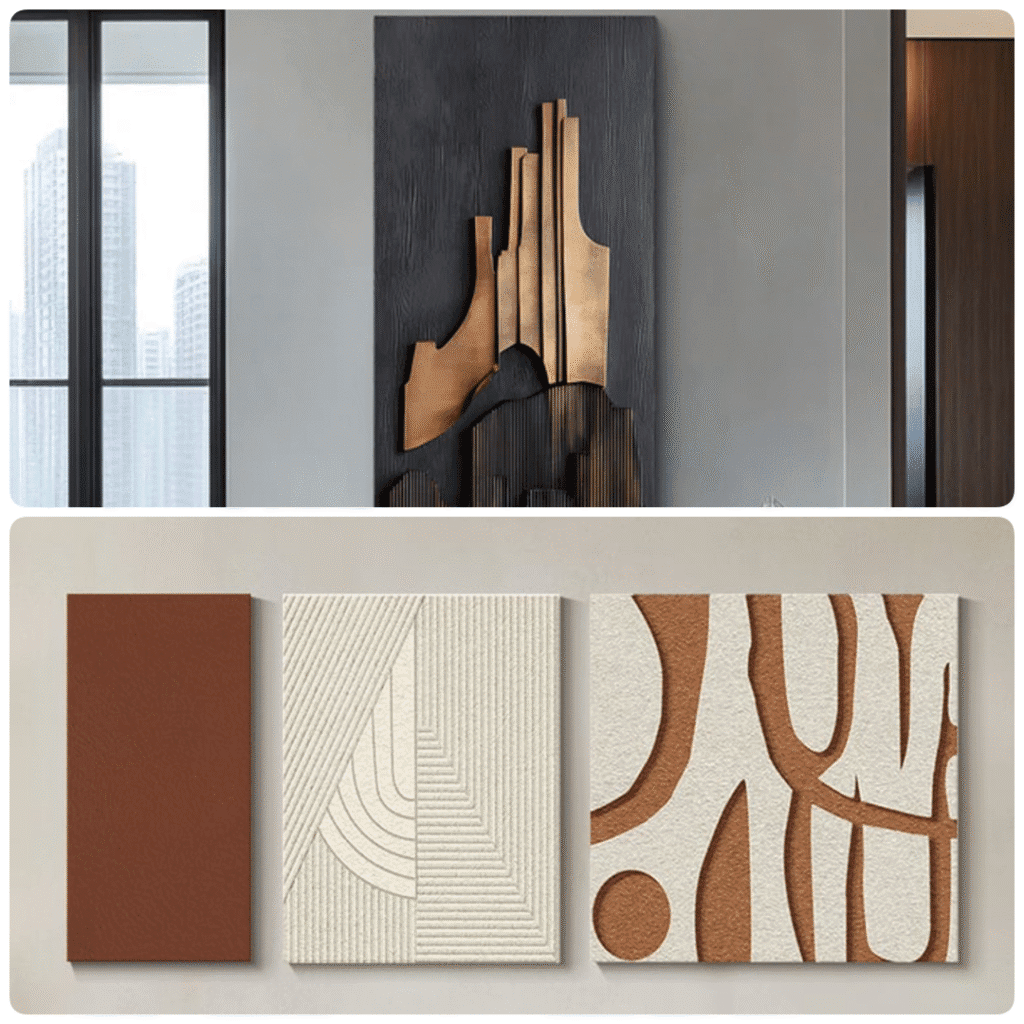
When using 3D art, consider both weight and installation. Heavier pieces should be anchored properly into studs or with hardware rated for their weight to avoid safety issues over time. As a factual note, adhesives or simple nails are rarely sufficient for solid wood or large ceramic pieces; using appropriate wall anchors helps prevent accidents. In my experience working with sculptural art, it is worth taking a few extra minutes with a stud finder and level to ensure long-term stability and a polished finish.
Placement is crucial so textured art does not feel cluttered. Good locations include:
- Above a dresser, where the piece becomes a focal point without competing with the bed.
- On a narrow wall near a window, to draw attention to a previously overlooked area.
- In a cozy reading corner, tying together a chair, side table, and floor lamp.
From hands-on work with clients who prefer neutral palettes, I have repeatedly seen how a single woven wall hanging or carved panel can become the most complimented element in the room, precisely because it adds touchable interest within a calm, minimalist scheme.
Bold Eclectic Wall Decor Ideas for Unique Rooms
Eclectic bedroom wall art celebrates individuality, layered styles, and the joy of mixing eras and textures. Instead of a matched set, you build a collected look that evolves over time. Vintage paintings can live alongside contemporary prints, travel mementos, and textile art, all tied together with a few repeating elements such as color, frame tone, or subject matter. The result can feel more like a personal gallery than a styled catalog room.
In my experience working on eclectic interiors, the key to success is intentional repetition in at least one of these categories:
- Color: Repeating two or three accent colors across multiple pieces.
- Material: Using similar frame finishes, like all brass, all black, or all wood.
- Motif: Echoing similar subjects such as botanicals, landscapes, or geometric designs.
Even when the mix is wild and expressive, these threads prevent the space from feeling chaotic. It is also important to understand that eclectic does not mean cluttered. Leaving some negative space on the walls allows your favorite pieces to stand out and gives your eye a place to rest.
Curated Gallery Walls with Personality
A gallery wall is one of the most beloved ways to express an eclectic style in the bedroom. You can arrange art above the headboard, across a long wall, or surrounding a mirror. The magic of a gallery wall lies in the mix: framed art, illustrations, postcards, textiles, and even sculptural pieces can coexist. Based on my past work with clients, the most successful gallery walls typically have at least one unifying element, such as consistent frame color or a restrained palette with a few accent tones.
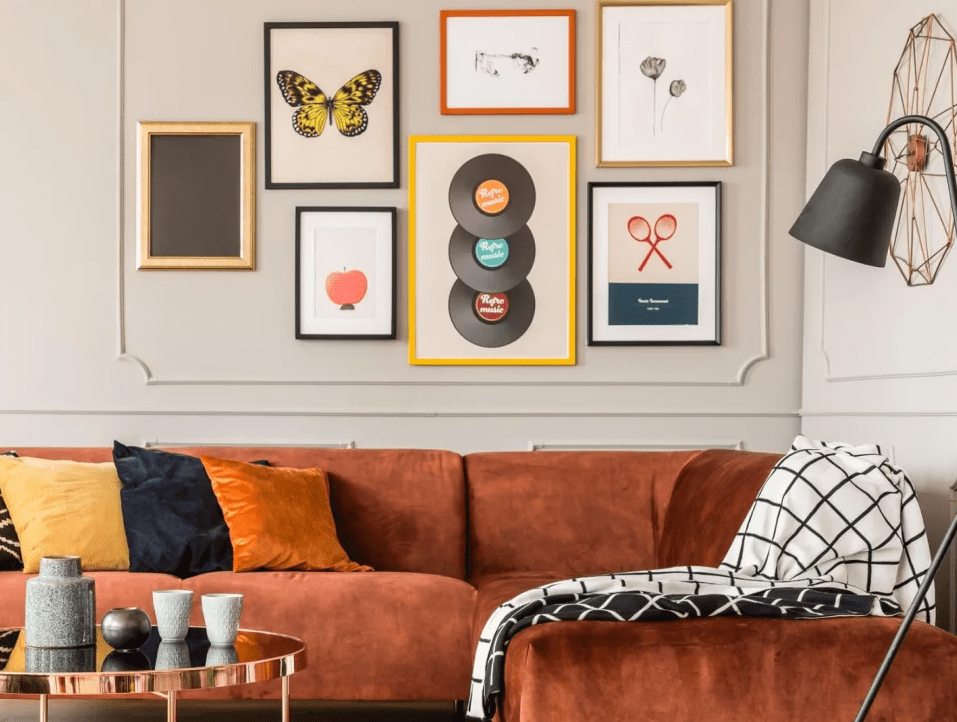
Before putting holes in the wall, lay your pieces on the floor to experiment with layouts. Start with the largest piece as an anchor, then build around it with medium and small frames. Aim for a visual balance rather than perfect symmetry. Keep spacing relatively consistent, usually between 1.5 and 3 inches, to give the collection a coherent structure. It often helps to keep the center of the overall gallery at eye level, roughly 57 to 60 inches from the floor, although you can adjust depending on ceiling height and furniture placement.
Here are practical tips for stress-free gallery hanging:
- Use painter’s tape to outline the arrangement on the wall before drilling.
- Hang the central pieces first, then work outward.
- Mix horizontal and vertical frames to create movement.
- Incorporate at least one unexpected item, such as a small textile or three-dimensional object.
From hands-on projects, I have found that leaning a few framed pieces on a picture ledge below a hung gallery can add depth and make it easy to rotate art without more holes.
Color-Forward Art to Energize the Bedroom
Bold, color-forward art can turn a bedroom into an energizing retreat that still feels cozy at night. The key is to decide which role color should play: accent, focal point, or full palette driver. For many people, it works best as a strong accent that pops against otherwise neutral bedding and walls. For instance, a large piece with deep teal, rust, and gold can guide your choices for throw pillows, blankets, and a rug, bringing cohesion to an eclectic mix.
When selecting vibrant art, pay attention to how colors interact with natural and artificial light. Some saturated hues can feel more intense under cool white bulbs, which may not suit a restful bedroom. Based on real-world projects, warm white lighting around 2700K tends to flatter rich colors and skin tones alike, which supports both visual comfort and the sense of relaxation. If your room gets strong daylight, note that direct sun can fade certain pigments over time; UV-filtering glass and rotating art periodically can help reduce this effect.
To work color confidently into an eclectic bedroom, consider:
- Choosing art that reuses colors already present in your textiles or rug.
- Repeating one standout hue at least three times in the room for balance.
- Using complementary colors in small doses to avoid visual noise.
In my experience curating color-driven bedrooms, even one bold canvas paired with two or three smaller pieces in similar tones can pull together a seemingly mismatched collection of furniture and decor.
Mixing Vintage Finds with Modern Prints
One of the most satisfying aspects of eclectic bedroom wall decor is blending vintage and contemporary pieces. A mid-century oil painting, a flea-market landscape, or a framed handwritten letter can sit comfortably beside a modern abstract print or graphic poster. This combination creates depth and a story that a single style cannot achieve alone. The key is to treat every piece with care so the mix feels intentional rather than random.
From hands-on work with collectors, I have observed that vintage pieces often benefit from updated frames and mats. Reframing an old painting in a slim, modern frame or pairing a vintage postcard with a crisp white mat can help it harmonize with newer art. At the same time, leaving some original frames with patina can add character. The goal is to strike a balance between preserving history and meeting contemporary design standards, especially in a bedroom where comfort and calm remain priorities.
Practical guidelines when mixing old and new:
- Use modern frames on some vintage art to tie it to contemporary pieces.
- Repeat at least one vintage element, such as two older pieces among several new ones.
- Group smaller vintage pieces in pairs or trios so they do not get lost beside large modern canvases.
In my experience working with eclectic bedrooms, the most memorable walls are the ones where a guest can point to a piece and ask about its story, and there is a meaningful answer behind it.
Conclusion: Final Thoughts on Elevating Bedroom Walls
Bedroom wall art is about much more than filling empty space; it shapes mood, reveals personality, and helps your sleeping area feel complete. By approaching your walls with the same care you give to linens, lighting, and furniture, you can build a bedroom that supports both rest and expression.
Whether you gravitate toward modern minimalist decor or bold eclectic styling, the principles behind successful bedroom wall art are similar: thoughtful scale, cohesive color, and a balance between visual interest and calm. Minimalist rooms benefit from fewer, larger pieces in soothing palettes with subtle texture, while eclectic spaces thrive on layered gallery walls, curated color, and a mix of vintage and contemporary finds. The right art creates a sense of intention, which in turn makes even a small or simple bedroom feel designed instead of improvised.
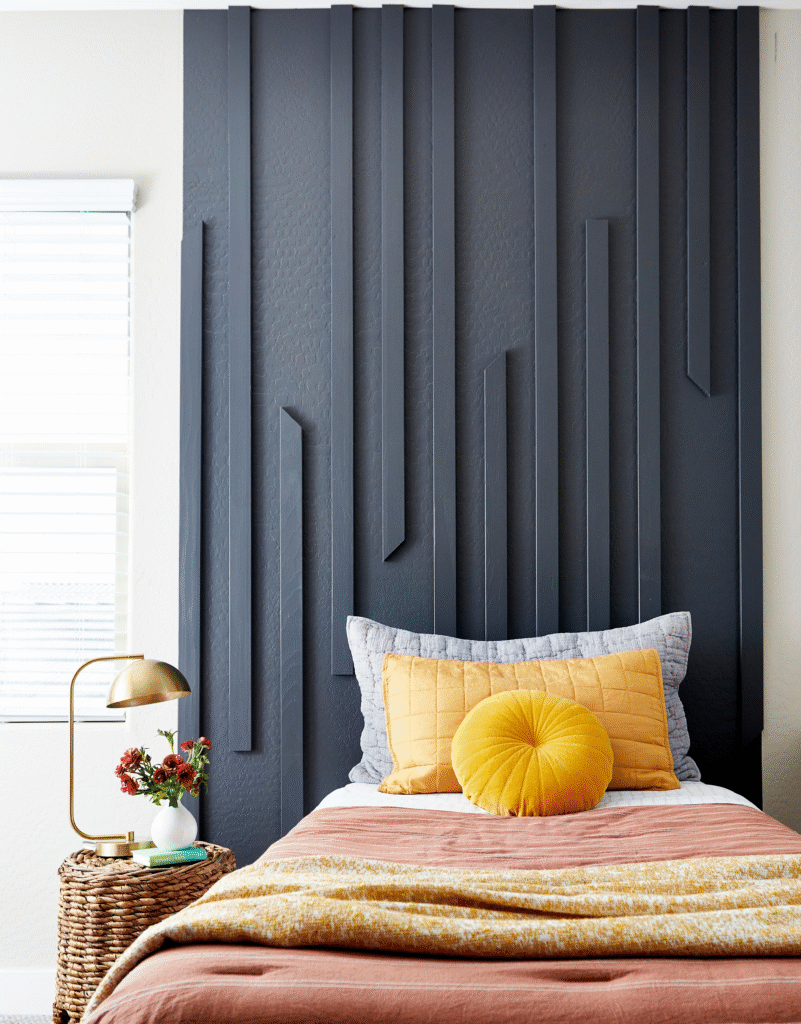
From hands-on work with clients, I have consistently seen that the most satisfying wall art choices are the ones that feel personally meaningful. A photograph you took yourself, a print from a favorite artist, or a textile from a memorable trip will age far better than something chosen only to fill space. At the same time, embracing guidelines on height, spacing, and lighting ensures that those meaningful pieces are shown at their best and contribute to the room’s comfort.
As you plan or refresh your bedroom, take your time and allow your wall art collection to grow slowly. Start with one or two anchor pieces, then layer in additional works that share a color, material, or mood. With each considered addition, your bedroom will move closer to a space that not only looks cohesive and stylish, but also truly feels like yours.
Excerpt:
Discover how to transform your bedroom with modern minimalist and bold eclectic wall art ideas, from serene abstracts and black-and-white photography to expressive gallery walls and vintage finds. Learn practical tips on scale, placement, and lighting so your art feels personal, cohesive, and truly elevates your space.

Maira Lindey is a home decor enthusiast who loves transforming ordinary spaces into warm, stylish havens. Through her writing, she shares simple, creative ideas that help people make their homes both beautiful and comfortable. Her approach combines aesthetic charm with practical solutions for everyday living.
With years of experience experimenting with colors, textures, and layouts, Maira enjoys guiding readers to express their personality through home design. She believes that even small changes can have a big impact, and she focuses on tips that are easy to implement without overwhelming the space or the budget.
Beyond decorating, Maira finds inspiration in nature, art, and everyday life. She encourages her readers to embrace creativity and make spaces that feel uniquely theirs, blending functionality with style in ways that are both inviting and livable.