A relaxed bohemian bedroom gives creative souls a place to breathe, dream, and experiment with color and texture without rules. This guide walks you through real-world ideas for textiles, colors, and furniture that turn your bedroom into a calming, expressive boho sanctuary.
Bohemian bedroom style is all about curated freedom, not chaos. With a few intentional choices, you can layer eclectic pieces, mix global patterns, and introduce meaningful objects so your room feels both peaceful and personal. The following sections break the process into simple, actionable steps that still leave plenty of space for your own artistic touch.
Layered Textiles & Colors for Effortless Boho Calm
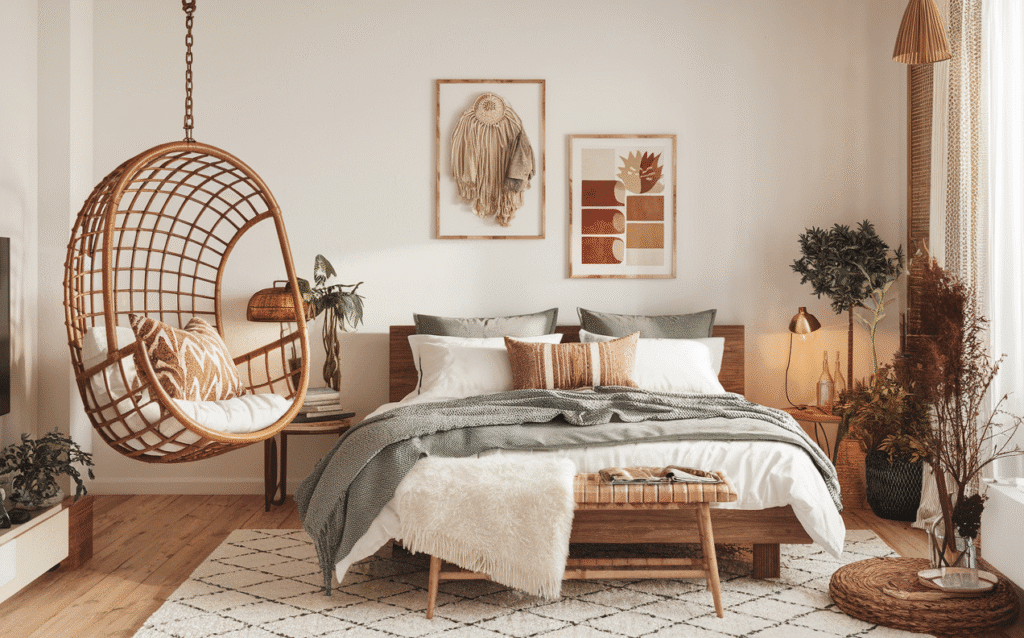
Layered textiles are the secret ingredient of every relaxed bohemian bedroom. Start at the foundation with a soft, natural-fiber rug, such as jute, cotton, or wool, large enough to extend at least 18 inches beyond each side of the bed. This adds grounding texture and makes bare feet happy on cool mornings. From there, build up the bed with breathable materials like cotton, washed linen, or bamboo blends, which stay comfortable in a range of temperatures and are easy to launder regularly.
Color in boho bedrooms leans warm and lived-in rather than bright and glossy. Earth tones such as terracotta, sand, olive, rust, and clay pair beautifully with muted jewel accents like teal, mustard, and wine. You can keep the walls neutral in off-white or soft greige, then let your bedding, rug, and artwork carry the richer colors so the room still feels restful enough for sleep. In my experience working with clients who are sensitive to visual clutter, this approach delivers plenty of creativity without overwhelming the senses.
Pillows, throws, and quilts are where the bohemian spirit truly shows. Mix patterns on a shared color palette, such as combining a block-printed duvet with striped lumbar pillows and a handwoven throw. For comfort, I recommend at least two different textures on the bed, like smooth cotton plus a chunky knit or textured kantha quilt. When using multiple textiles, choose washable pieces and follow label instructions for water temperature and drying, since natural fibers can shrink or fade if washed too hot.
Eclectic Furniture Mixes to Spark Bedroom Creativity
A relaxed boho bedroom rarely looks like a showroom set, and that is the point. Instead of matching furniture, aim for a collected-over-time feeling with different materials and silhouettes that still share a visual thread. For example, a clean-lined platform bed can sit comfortably next to a carved wooden nightstand and a rattan accent chair as long as a few tones or shapes relate. From hands-on work with small-space bedrooms, I have found that mixing no more than three main wood tones keeps the eclectic look from tipping into visual noise.
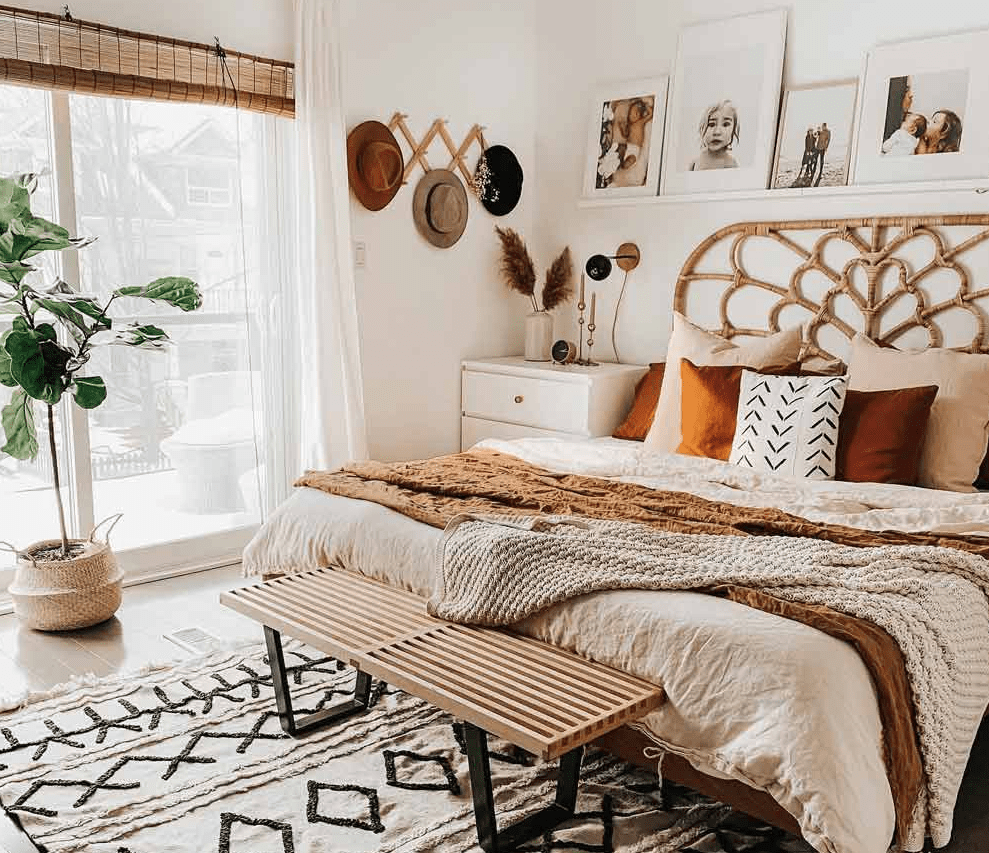
Look for pieces that have a story. Vintage or secondhand furniture brings instant soul, and minor imperfections like worn edges or patina often suit the bohemian aesthetic. You can easily refresh an older dresser with new knobs, a light sanding, and a coat of low-VOC paint in a muted color. When buying used items, always check for structural stability and signs of pests, and avoid heavily peeling finishes that might contain lead, particularly in pre-1978 pieces.
Eclectic furniture also creates opportunities for DIY creativity. A stacked set of old suitcases can become a bedside table, or a salvaged door can transform into a headboard when securely mounted to wall studs. For safety, any heavy or repurposed pieces should be anchored properly to avoid tipping, especially in homes with children or pets. By combining practical concerns with artistic reuse, you build a space that feels both personal and responsibly put together.
Curating a Boho Color Palette that Feels Personal
A bohemian bedroom color palette should feel like a reflection of your inner landscape rather than a strict design rule. Start with three core tones that mirror how you want the space to feel, such as warm clay, soft peach, and sage for a grounded vibe, or dusty rose, indigo, and cream for a dreamy, romantic mood. Based on my past work with color-sensitive clients, choosing one dominant neutral, one main accent, and one secondary accent keeps the palette harmonious even when patterns vary.
From there, pull supporting colors from your favorite textiles and artwork. For example, if your vintage rug includes hints of teal and rust, echo those colors in a pillow or throw instead of adding a new, unrelated hue. This repetition quietly unifies the room. If you prefer to experiment over time, keep big surfaces like walls and large furniture pieces in timeless neutrals so you can trade out smaller colorful elements seasonally without repainting.
Lighting changes how colors read, especially at night. Warm white bulbs in the range of 2700K to 3000K will keep terracottas and creams soft and inviting, while cooler bulbs can make them look flat or harsh. Test paint swatches and fabrics in both daytime and evening light before committing, since pigments can shift noticeably. This simple check helps ensure the boho palette you fell in love with online actually delivers the same feeling in your real bedroom.
Using Pattern, Texture & Natural Materials with Intention
Bohemian bedrooms are famous for pattern mixing, but the most successful rooms follow a few quiet rules. Try combining patterns of different scales, such as a large-scale floral, a medium stripe, and a small geometric print. Keep at least one pattern more subtle or tone-on-tone so the eye has a place to rest. In my experience styling photo shoots, a ratio of about 50 percent solids, 30 percent small-scale patterns, and 20 percent bold patterns keeps the look balanced.
Texture is just as important as pattern for creating that relaxed, artistic feel. Blend materials like linen, velvet, slub cotton, rattan, seagrass, and lightly distressed wood. Natural materials tend to age gracefully and are usually more breathable, which is important for comfort and air quality. When choosing natural fibers, note that some materials like untreated jute can shed a bit at first and may not suit those with dust sensitivities, so regular vacuuming and occasional shaking out are helpful.
To keep things intentional rather than chaotic, repeat a few textures throughout the room. For example, if you have a woven rattan headboard, echo that material in a storage basket or pendant light. If you use brass hardware on your nightstands, repeat that metal in a lamp base or picture frame. These recurring details quietly tie the space together, even as the overall style stays relaxed and eclectic.
Creating a Restful Yet Creative Bed Zone
In a boho bedroom, the bed is both a canvas and a sanctuary. Begin with a comfortable, supportive mattress suited to your sleep needs, since aesthetics cannot compensate for poor sleep quality. A simple, low-profile bed frame in wood or metal provides an unfussy foundation for layers. I often suggest a neutral base like natural wood or black metal so your linens and pillows can shift with your creative mood without requiring new furniture.
Layer the bed with breathable sheets, a lightweight quilt or duvet, and a mix of pillows in various sizes and textures. Aim for two to four sleeping pillows plus a small group of decorative pillows that can be easily moved at night. From real-world clients, I have learned that more than five decorative pillows tend to become clutter rather than comfort, especially in smaller rooms. Include at least one washable throw blanket near the foot of the bed for reading, journaling, or sketching sessions.
Keep the area beside the bed practical but soulful. A nightstand should have space for a small tray, water glass, and a book or sketchpad, along with a lamp that provides gentle, focused light. Bedside lighting between 2700K and 3000K, ideally on a dimmer or controlled with a warm-toned bulb, helps your brain wind down for sleep. Incorporate personal objects like a favorite stone, a tiny plant, or a framed photo, but edit often so the bedside does not become a drop zone for clutter.
Lighting Layers for a Soft, Dreamy Atmosphere
Lighting can make or break the relaxed bohemian atmosphere. Rather than relying on a single overhead fixture, create layers of light at different heights. A combination of a ceiling light, bedside lamps, floor lamp, and a string of delicate fairy lights or paper lanterns can shift the mood from energized to tranquil with just a few switches. Based on real-world testing in bedrooms and studios, having at least three separate light sources gives you flexible control over ambiance.
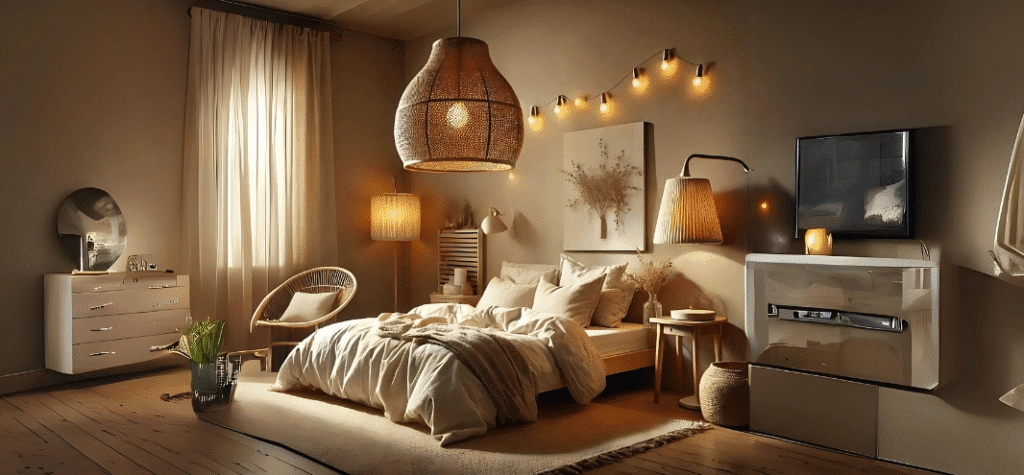
Choose bulbs in a warm white color temperature, ideally between 2200K and 3000K, to keep the space cozy and flattering. Brighter, cooler light is better reserved for task areas like desks or workspaces, and even then, pairing a cooler desk light with warmer ambient lighting keeps the room from feeling clinical. Always follow manufacturer guidance on wattage and fixture compatibility to avoid overheating, especially with enclosed shades or older fixtures.
For a boho touch, look for lamps and lanterns that incorporate natural materials and handmade details, such as woven rattan pendants, carved wooden bases, or Moroccan-inspired metal lanterns with pierced patterns. Candles can add a beautiful glow but should be used with caution: never leave them unattended, keep them away from fabrics, and consider unscented or naturally scented soy or beeswax options if you are sensitive to artificial fragrances. Flameless LED candles offer a safer alternative with a similar warm effect.
Art, Plants & Meaningful Objects as Soulful Accents
The most memorable bohemian bedrooms are filled with art and objects that carry genuine meaning rather than generic decor. Hang artwork that inspires your creativity, whether that means abstract canvases, vintage posters, textile hangings, or your own pieces. A loose gallery wall above a dresser or along a side wall can feel wonderfully boho, especially if you mix frame styles within a consistent color range, like all wood or all black and brass.
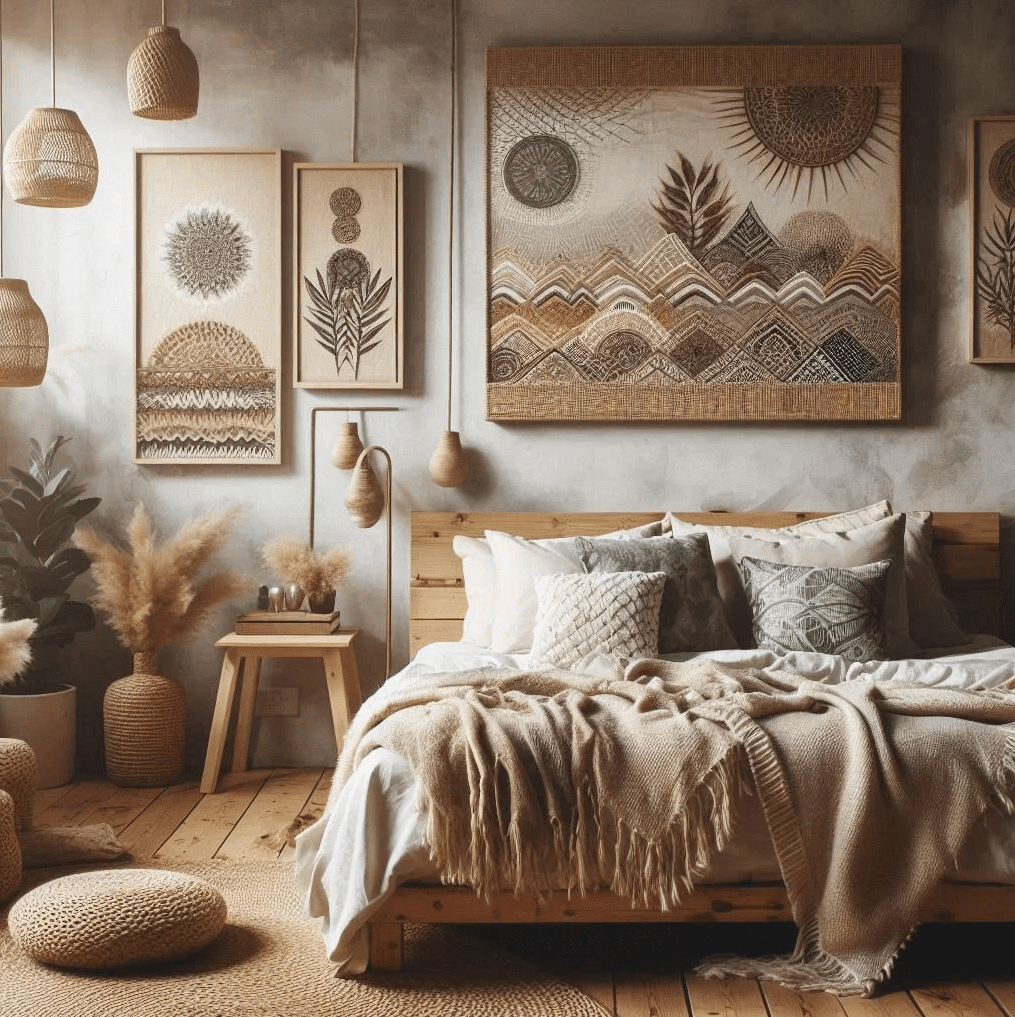
Plants bring life and a gentle sense of wildness to a boho bedroom. Easy-care indoor plants such as pothos, snake plant, and ZZ plant can tolerate a range of light conditions and occasional forgetful watering. It is important to match plants to your actual light levels: low-light species will struggle in bright, direct sun, and high-light plants can decline in dim corners. From hands-on work with plant-friendly interiors, I have found that placing plants near, but not directly against, windows helps reduce leaf scorch and drafts.
Layer in meaningful objects: travel souvenirs, handmade ceramics, a woven basket from a local artisan, or a stack of well-loved books. To avoid clutter, group small items into intentional vignettes on trays, shelves, or a dedicated display area. Rotate pieces seasonally or when you feel creatively stuck, so your surroundings evolve along with your inner life. This ongoing curation process is one of the most satisfying parts of living in a bohemian-inspired space.
Designing Cozy Creative Corners within the Bedroom
A relaxed boho bedroom can also double as a small creative studio or reading retreat. Even in tight rooms, a simple corner chair or floor cushion with a nearby side table can become a cherished spot for journaling, sketching, or meditation. Aim to leave at least 24 to 30 inches of clearance around furniture so the area feels accessible rather than cramped. In my experience working with compact apartments, a single comfortable chair plus a small lamp often makes the biggest impact.
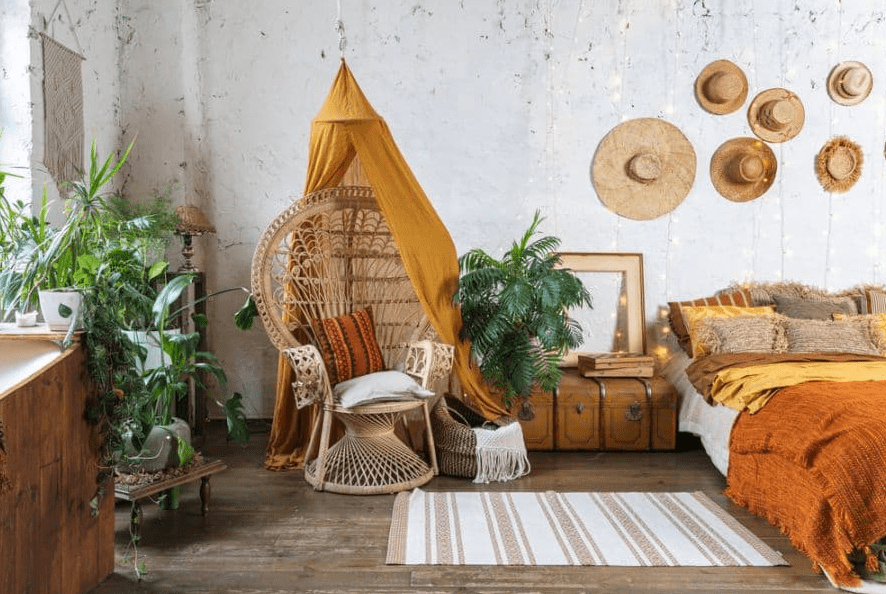
Anchor your creative corner with a soft rug or layered textiles to signal a shift from everyday tasks to reflective time. Add a small shelf or basket for tools like notebooks, colored pencils, or knitting supplies, and keep them within arm’s reach so there is no friction when inspiration hits. Avoid placing this zone directly under bright overhead lights; instead, use a warm, directional lamp that can be aimed at your work surface without glaring into your eyes.
Protect your sleep quality by gently separating creative energy from resting space. If your art materials tend to spread out, designate one closed container or cabinet to tuck them away at night, helping the room visually calm down. A folding screen or curtain can also create a subtle division between the bed and work area in studio-style spaces. This blend of openness and gentle boundaries keeps the boho bedroom both inspiring and truly restorative.
Maintaining a Calm, Collected Boho Look over Time
A bohemian bedroom should evolve, but it still benefits from regular editing. Once a season, step back and reassess what is in the room. Remove items that feel heavy, unused, or no longer reflective of your current creative direction. From hands-on projects with long-term clients, I have found that this simple ritual prevents boho spaces from slipping into cluttered storage zones.
Focus on maintenance habits that protect the comfort and longevity of your textiles and furniture. Vacuum rugs weekly, especially high-pile or shag styles that can trap dust, and rotate them every few months to even out wear and sun exposure. Wash bedding according to care labels, generally every one to two weeks for sheets and pillowcases, and air out quilts or heavy blankets outdoors in indirect light when possible. Natural fibers can fade in strong direct sun, so consider sheer curtains if your room gets intense midday light.
As your taste shifts, update small, high-impact elements first: pillow covers, throws, lamp shades, or a single accent chair. These pieces can refresh the mood without requiring full renovation. Keep your overarching palette and a few signature textures consistent as you experiment, and your relaxed bohemian bedroom will remain both cohesive and delightfully unique year after year.
Conclusion
A relaxed bohemian bedroom does not rely on strict rules or expensive decor; it grows from thoughtful layers of color, texture, and meaning. By mixing eclectic furniture, soulful textiles, soft lighting, and personal objects, you can shape a sanctuary that supports both deep rest and daily creativity.
From real-world projects, I have seen that the most successful boho bedrooms begin with a clear intention: calm, comfort, and authentic expression. Start with a simple neutral foundation, then gradually add textiles, plants, art, and vintage finds that genuinely resonate with you rather than chasing trends. With each small addition, pay attention to how the room feels, not just how it looks.
Over time, this approach turns your bedroom into a living, evolving reflection of who you are. Whether you are curling up with a sketchbook, rearranging pillows, or watching morning light filter through patterned curtains, your bohemian-inspired space can become a quiet anchor for your creative soul and a place you are always happy to come home to.

Maira Lindey is a home decor enthusiast who loves transforming ordinary spaces into warm, stylish havens. Through her writing, she shares simple, creative ideas that help people make their homes both beautiful and comfortable. Her approach combines aesthetic charm with practical solutions for everyday living.
With years of experience experimenting with colors, textures, and layouts, Maira enjoys guiding readers to express their personality through home design. She believes that even small changes can have a big impact, and she focuses on tips that are easy to implement without overwhelming the space or the budget.
Beyond decorating, Maira finds inspiration in nature, art, and everyday life. She encourages her readers to embrace creativity and make spaces that feel uniquely theirs, blending functionality with style in ways that are both inviting and livable.