Creating a calming bedroom with gentle green plant arrangements is one of the simplest ways to support more restful sleep. This guide walks you through soft layouts, easy care plants, and styling tricks that quietly transform your bedroom into a peaceful retreat.
Bedroom plants can help your space feel softer, fresher, and more grounded, even though they do not directly cure sleep problems or purify air in a medical sense. Used thoughtfully, they become visual cues that it is time to slow down, breathe, and unwind at the end of the day.
Soft Green Layouts That Quiet a Busy Bedroom
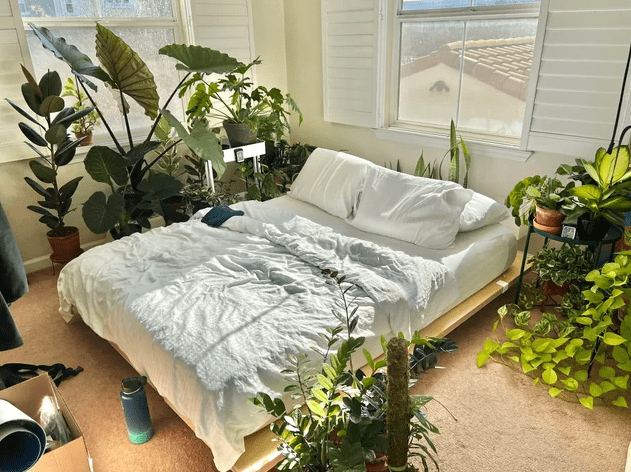
A busy bedroom often feels visually loud: too many colors, harsh lines, screens, and clutter fighting for attention. Soft green plant layouts work like a mute button, toning down everything around them. Instead of a loud gallery wall or bright textiles, you get gentle leaf shapes, organic shadows, and subtle color that naturally relax the eye.
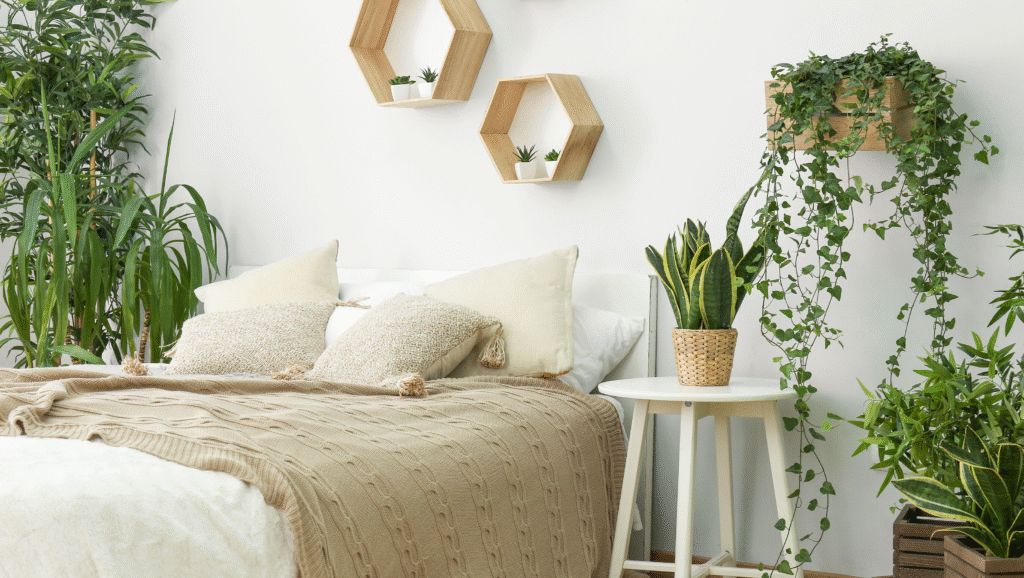
In my experience styling bedrooms for clients who struggle to switch off, the most effective plant layouts rely on 3 ideas: limit the color palette, repeat similar textures, and keep plants grouped rather than scattered. For example, three medium plants with similar foliage tones near the window usually feel calmer than seven random plants spread across the room. Repetition makes the space feel intentional rather than chaotic.
To quiet a busy bedroom with plants, try:
- Using a soft green palette: sage, olive, and silvery greens instead of neon or variegated showpieces.
- Limiting plant containers to 2 or 3 finishes, such as matte white, warm tan, and light gray.
- Choosing rounded or cylindrical pots, which visually soften hard edges from furniture.
- Keeping most of the greenery in one or two zones, like near the window and beside the bed.
Plant Groupings That Encourage Restful Sleep
Thoughtful plant groupings can subtly support your bedtime routine by creating visual anchors around the bed and reading areas. The goal is not to turn your bedroom into a jungle, but to create a few soothing focal points that guide your gaze away from screens and work items. When your eyes land on restful greenery instead of your laptop, it is easier to shift into sleep mode.

From hands-on projects, I have found that triangular groupings of plants at different heights feel especially calm. For example, you might pair a taller floor plant (such as a snake plant) with a medium tabletop plant (like a peace lily) and a small trailing plant on a shelf. The gradual height change mimics gentle hills rather than sharp spikes, which feels more restful.
Try these calming groupings:
Bedside trio
- One compact floor plant on the far side of the nightstand.
- One small plant on the nightstand itself.
- One trailing plant on a nearby shelf.
Window wellness cluster
- One taller plant that loves brighter light near the curtain edge.
- Two smaller plants that can tolerate a bit of distance from the glass.
Cozy reading corner
- A floor plant beside a chair.
- A mid-height plant on a stool or plant stand.
- A tiny plant on a side table near your book or lamp.
Choosing Easy Care Bedroom Plants
For a bedroom to feel calming, your plants must feel effortless, not like a to‑do list. Easy care plants reduce mental load and allow you to appreciate the styling without worrying about complex watering schedules or special fertilizers. Light levels can be lower in bedrooms, so selecting species that tolerate indirect or low light is key.
In my experience, the best bedroom plants share three traits: they handle moderate to low light, do not need daily watering, and stay relatively compact or slow growing. Good choices include snake plant (Sansevieria), pothos, ZZ plant, heartleaf philodendron, and peace lily. These plants are commonly available, forgiving to beginners, and adapt well to indoor conditions when basic needs are met.
For easy bedroom plant care, keep in mind:
Light
- Most common houseplants prefer bright, indirect light, not direct midday sun.
- Low light plants can survive further from a window but usually grow more slowly.
Water
- Check soil with your finger; water when the top inch feels dry, rather than on a rigid schedule.
- Avoid letting pots sit in standing water, as this can lead to root rot.
Containers and drainage
- Use pots with drainage holes and saucers to prevent overwatering.
- If you love decorative containers without holes, place a plastic nursery pot inside and remove it for watering.
Placement Strategies for Better Sleep Flow
Where you place plants in the bedroom matters as much as which plants you choose. The goal is to support a smooth flow from day to night: work and stimulation by the window or desk, then calm, warm-light areas near the bed. Plants can function as gentle dividers, visually separating the sleep zone from the work or dressing zone.
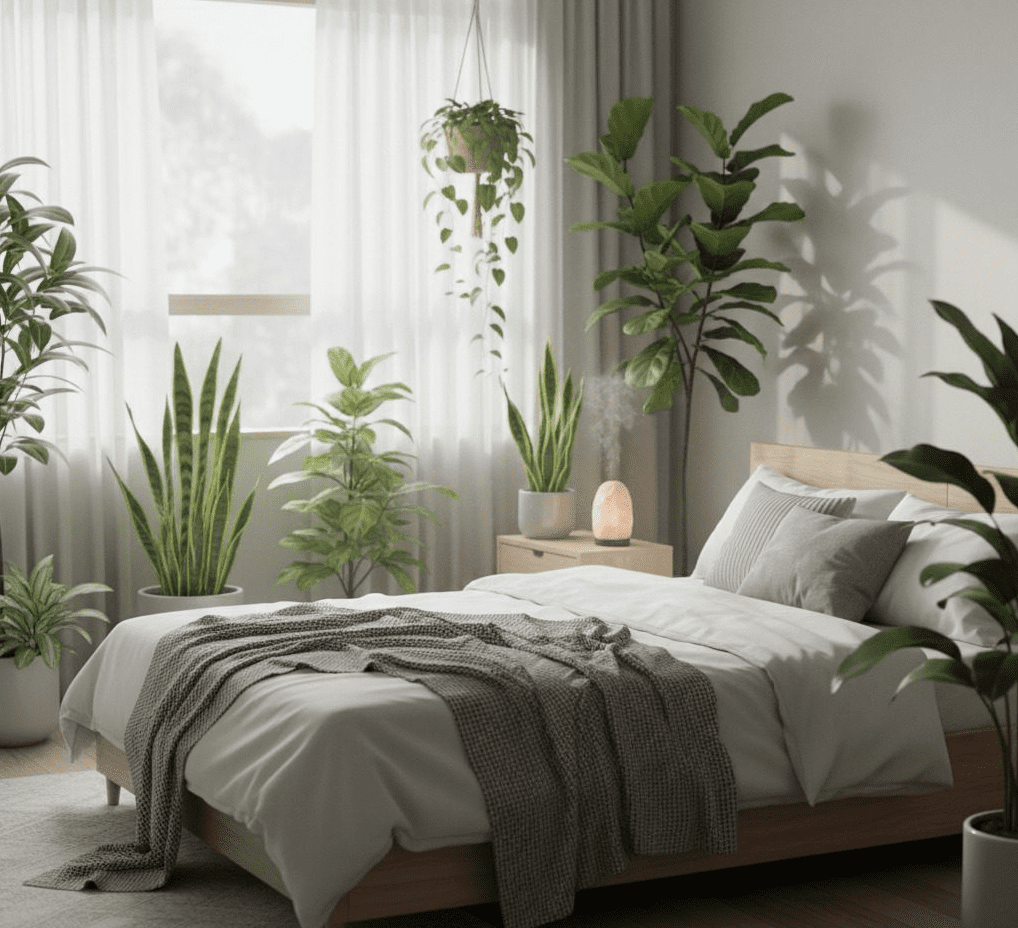
Based on my past work with clients, placing large statement plants directly in the line of sight from the pillow makes the space feel serene. At the same time, keeping heavy or very tall plants slightly away from the headboard can prevent a sense of crowding. Balance is important: you want to feel nurtured, not boxed in.
Effective placement ideas include:
Around the bed
- One medium plant on each side of the bed, slightly behind the nightstands.
- A small plant on only one nightstand to avoid cluttering surfaces where you keep books or glasses.
By the window
- A cluster of 2 to 4 plants that love brighter light, acting as a green curtain edge.
- A low shelf or bench beneath the window as a dedicated plant zone.
Separating zones
- A tall plant between a desk and the sleep area, signaling a shift from work to rest.
- A plant stand near a dressing area to soften mirrors or wardrobes.
Remember that plants need sufficient light to stay healthy. Bedrooms with very small or north-facing windows may require lower-light species or a discreet full-spectrum grow bulb rated for indoor use, positioned so it does not shine into your eyes at night.
Gentle Color Palettes and Pot Styling
Calming bedroom plant arrangements are not only about the greenery; your pot styling and color choices play a major role. A room filled with bright, clashing planters can feel just as overstimulating as any other decor. Soft neutrals, warm woods, and subtle textures help the foliage stand out without creating visual noise.
In my experience designing compact apartments, repeating similar pot colors instantly calms a room. Two to three tones are usually enough: for instance, matte white, sand, and light gray, or beige, terracotta, and pale green. Adding natural materials like wicker baskets, linen, and light wood frames supports a restful, spa-like feel without going completely minimalist.
Styling tips for a quiet color story:
Keep to a tight palette
- Choose 2 to 3 main colors for pots and stick with them.
- Use a single accent color sparingly, such as muted blush or soft blue.
Introduce texture, not pattern
- Opt for ribbed ceramics, seagrass baskets, or unfinished wood instead of bold prints.
- Textures add depth while staying low-key.
Coordinate with bedding and textiles
- Match pot colors to your duvet or throw pillows for a cohesive look.
- Use warm white lighting (around 2700K) to bring out the gentle greens and soft neutrals.
Nighttime-Friendly Plant Choices and Safety
Although houseplants can contribute to a soothing environment, it is important not to rely on them for medical benefits. Some species are often promoted as “air purifying,” but research shows that while plants can remove certain compounds in controlled lab settings, the effect is minimal in regular rooms compared to proper ventilation. Think of bedroom plants as emotional and aesthetic support rather than a health treatment.
From hands-on work with families and pet owners, I always stress plant safety and allergies. Many common houseplants are mildly toxic if ingested, which can be a concern for children and pets that chew leaves. For fully pet-safe options, consider plants like spider plant, rattlesnake calathea, certain ferns, and peperomia. Always verify toxicity through reliable sources such as veterinarian or botanical databases, especially if you have cats or dogs.
Nighttime-friendly plant tips:
Avoid strong fragrances
- Highly scented flowering plants can bother sensitive sleepers or trigger headaches.
- Choose unscented foliage plants for the bedroom.
Check toxicity and allergies
- Keep potentially toxic plants out of reach of children and pets.
- If anyone in the home has plant allergies, test with one plant first instead of filling the room.
Keep plants clean and healthy
- Wipe leaves occasionally with a damp cloth to reduce dust.
- Inspect for pests regularly and treat early with gentle, indoor-safe methods if needed.
Simple Maintenance Rituals That Support Relaxation
Caring for your plants can become part of a soothing wind‑down ritual rather than a chore. Short, regular check‑ins keep plants healthy and reinforce the idea that your bedroom is a space you tend to with care. Low maintenance is still the goal, but a bit of gentle routine adds to the calming effect.
In my experience, a weekly 10-minute plant check is enough for most bedrooms. During this time you can feel the soil, rotate pots for even growth, and remove any yellow leaves. Tying these steps to another habit, like changing bedsheets or doing your Sunday laundry, helps you remember without stressing about schedules.
Build a simple plant care rhythm:
Weekly
- Check moisture with your finger and water any plant that feels dry in the top inch of soil.
- Turn each pot a quarter turn so plants grow upright rather than leaning toward the window.
Monthly
- Wipe leaves gently to remove dust, which also lets you inspect for pests.
- Trim dead leaves and tidy the soil surface.
Seasonally
- Adjust watering frequency in winter when growth slows and rooms may be drier.
- Move plants slightly closer to windows if natural light drops during darker months.
Treating plant care as a quiet, mindful task before or after making your bed can help signal to your brain that this room is a sanctuary, not another workspace.
Creating a Restful Bedside Plant Moment
The bedside area is the last thing you see at night and the first thing you focus on in the morning, which makes it prime real estate for calming plant styling. A carefully chosen bedside plant or two can soften hard lamp lines, frame artwork, and introduce a gentle natural element to your sleep routine.
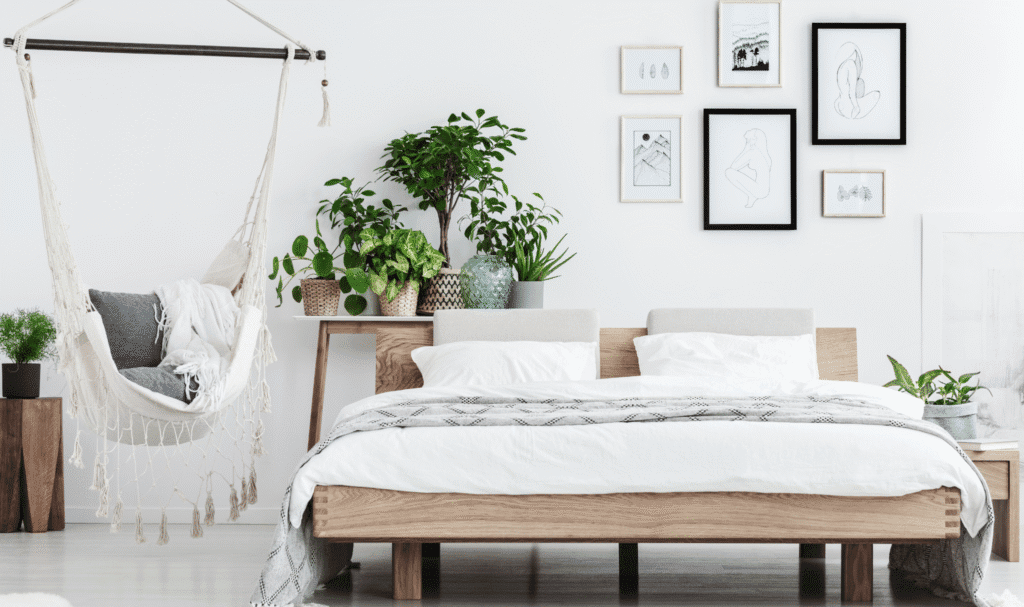
Based on real-world styling sessions, keeping bedside surfaces 70 percent clear makes the space feel calm and functional. That usually means one lamp, one small plant, and space for a book, glasses, or water. If both nightstands are crowded with accessories plus large plants, your mind can interpret the scene as clutter rather than calm.
For a restful bedside plant moment:
Choose compact, tidy plants
- Small peace lilies, compact snake plants, or tiny philodendrons are good candidates.
- Avoid plants with very wide leaves that overshadow reading lamps.
Mind the height
- Keep plant height below eye level when lying in bed, so they do not block light or feel intrusive.
- If you place a plant on the floor next to the nightstand, ensure it does not obstruct drawers.
Style with intention
- Pair the plant with a carafe, a book, or a small ceramic dish to create a simple vignette.
- Use coasters or trays under pots to protect furniture from moisture.
Conclusion: Designing a Bedroom Greenery Routine You Can Live With
Calming bedroom plant arrangements work best when they blend seamlessly into your daily life, supporting restful sleep without adding stress or clutter. A few well-chosen, easy care plants placed with intention can shift your space from busy to quietly restorative.
Creating a restful bedroom with plants is less about filling the room with greenery and more about thoughtful, gentle choices. By focusing on soft green layouts, simple groupings, and easy care species, you create an environment that visually tells your body it is time to unwind. Greenery becomes part of a bigger relaxation system that includes lighting, color, and layout, rather than a stand-alone feature.
From hands-on work with clients, I have seen that the most sustainable bedroom designs are the ones that honor routines and personality. If you are a low-maintenance person, choose hardy plants and minimal groupings. If you enjoy tending to details, you might prefer more varied species with a slightly more layered look. Either way, a limited color palette and clear zones at the bed, window, and reading corner keep the space coherent and calm.
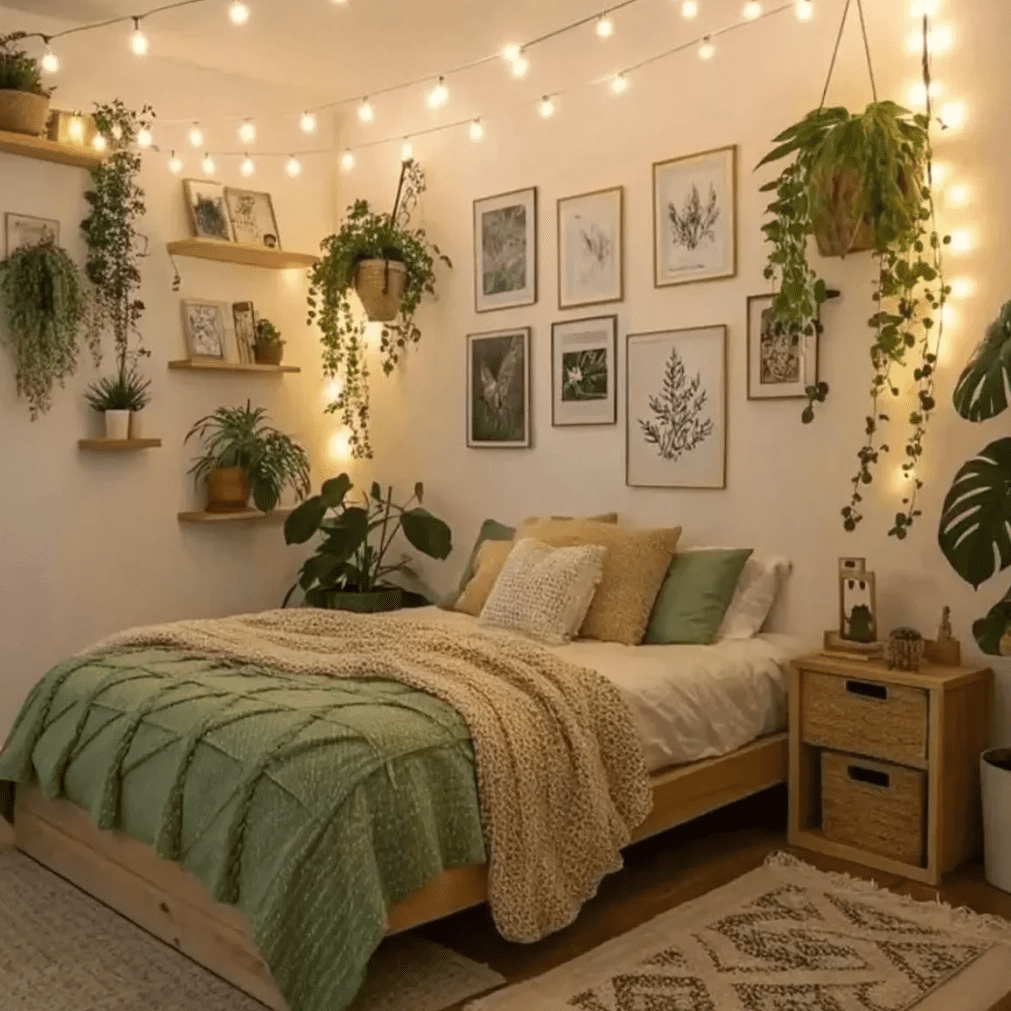
As you refine your bedroom plant styling, remember a few key guidelines:
- Prioritize light and safety so plants thrive without risk to pets or children.
- Stick to containers and accessories that echo your textiles and overall palette.
- Build a short, regular plant care ritual that supports, rather than disrupts, your sleep schedule.
With these principles, bedroom plant arrangements stop being decor trends and become a nurturing part of your everyday life, helping you step into a quieter, more restful night each time you enter the room.
Excerpt:
Soft green bedroom plant arrangements can gently quiet visual clutter, create restful focal points around your bed and window, and fit into simple care routines that support better sleep. By choosing easy care plants, calming color palettes, and intentional groupings, you can transform your bedroom into a peaceful retreat without adding stress or maintenance overload.

Maira Lindey is a home decor enthusiast who loves transforming ordinary spaces into warm, stylish havens. Through her writing, she shares simple, creative ideas that help people make their homes both beautiful and comfortable. Her approach combines aesthetic charm with practical solutions for everyday living.
With years of experience experimenting with colors, textures, and layouts, Maira enjoys guiding readers to express their personality through home design. She believes that even small changes can have a big impact, and she focuses on tips that are easy to implement without overwhelming the space or the budget.
Beyond decorating, Maira finds inspiration in nature, art, and everyday life. She encourages her readers to embrace creativity and make spaces that feel uniquely theirs, blending functionality with style in ways that are both inviting and livable.