

Create warm, cozy lighting using simple up-cycled tin cans, a few basic tools, and plenty of creativity. This guide walks you through every step so you can safely and confidently make beautiful DIY lanterns for indoors or outdoors.
Up-cycled tin can lanterns are one of the simplest ways to turn everyday recycling into magical, cozy lighting. With a handful of tools and a little patience, you can transform old food cans into handmade tin lights that glow with personality and charm.
Prepare & Gather Supplies for Tin Can Lanterns
Before creating your cozy up-cycled lanterns, take a moment to gather the right materials and tools. Good preparation keeps the project simple, safe, and enjoyable, especially if you plan to craft with kids or friends. In my experience working on beginner-friendly DIY classes, having all the supplies laid out in advance makes the creative part much more relaxing and fun. For basic tin can lanterns, you will need clean cans, a way to punch holes, and a safe light source like LED tealights.
Start by collecting tin cans in a few sizes. Standard soup and vegetable cans work well, and tall coffee cans or large tomato cans can become statement lanterns. Wash them thoroughly and remove labels and glue residue. You can soak cans in warm, soapy water for 10 to 20 minutes, then scrape off paper with a sponge or plastic scraper. Avoid harsh solvents indoors; if you use something like adhesive remover, do it in a well-ventilated area.
The essential tool list for up-cycled tin lights is short but important. Most makers use:
- A hammer and a sturdy nail, screw, or awl for punching holes
- A thick towel or scrap wood to support the can
- A freezer-safe container or zip bag for filling the cans with water
- Spray paint or acrylic paint suitable for metal
- LED tea lights or small LED string lights
From hands-on workshops, I have found that LED lights are the safest option, especially if lanterns are used on balconies or near kids and pets, because they avoid open flame and reduce fire risk. If you decide to use real candles, always keep them in sight, place lanterns on nonflammable surfaces, and never leave them burning unattended.
Clean, Freeze & Safely Prep Your Tin Cans
A little prep work goes a long way toward making your DIY lanterns look polished and last longer. Once labels are removed, check the rims of the cans. Some cans have sharp edges that can cut your fingers. If the rim feels rough, use a metal file or a piece of medium-grit sandpaper to smooth it. For extra safety, you can also use a can opener that creates a smooth edge next time you open cans, then set those aside specifically for craft projects.
To make punching designs easier, you will fill the cans with water and freeze them. This step keeps the metal from denting when you tap it with a hammer. Fill each can with water almost to the top, leaving about 1/4 inch of space to allow for expansion as it freezes. Place the cans upright in the freezer for several hours or overnight until they are rock solid. Based on real-world testing in my own kitchen, I have found that freezing the cans fully is the difference between crisp designs and crumpled lanterns.
Before you begin punching holes, organize a safe workspace. Use:
- A sturdy workbench or strong table
- A folded towel, rubber mat, or scrap wood to keep the can from slipping
- Good lighting so you can see your template clearly
- Closed-toe shoes and safety glasses for protection
If you are crafting with children, keep them involved in design, painting, and decorating, but handle the hammering and hole punching yourself to reduce risk. It is also a good idea to have a small trash container nearby for metal shavings and any paint tape or paper you remove during the process.
Sketch Simple Lantern Designs & Patterns
Designing your punched pattern is where your up-cycled lanterns gain personality. You can choose anything from simple dotted stripes to stars, hearts, or word art such as “JOY” or “HOME.” For your first lantern, stick with an easy repeating pattern. In my experience running community DIY nights, beginners are happiest when they start simple and build up complexity on later lanterns. A basic vertical line or spiral of evenly spaced holes can look surprisingly professional when lit.
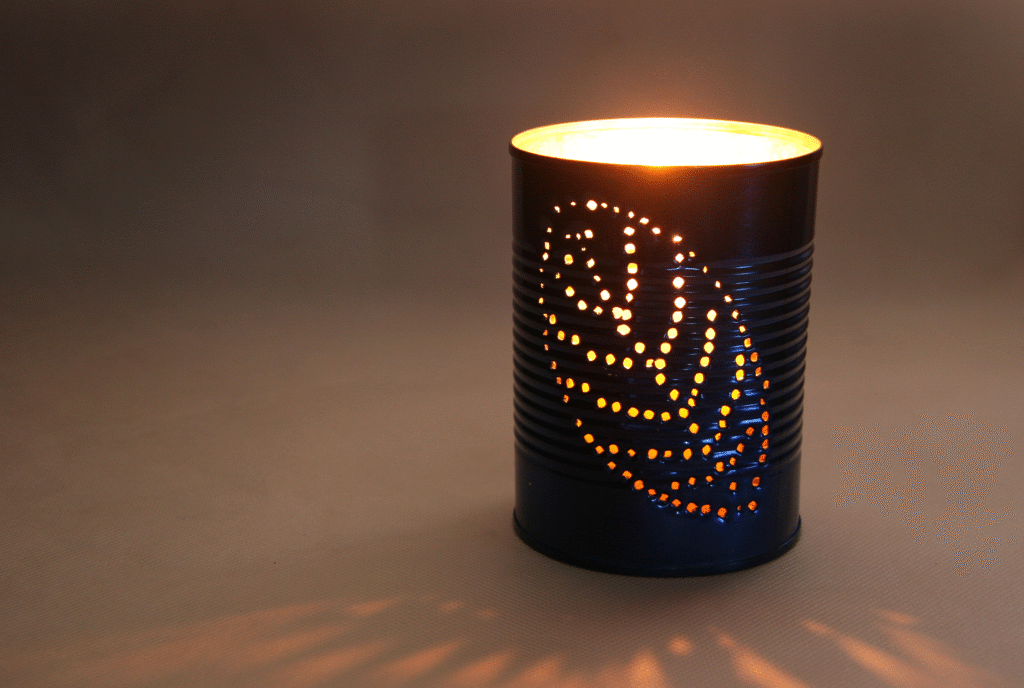
Use a pencil, washable marker, or paper template to plan your design on the can. Some makers like to tape a printed design to the outside of the can, then punch through the paper as a guide. Others prefer to draw dots directly where each hole will go. Consider how the light will spill out and how easy the pattern will be to follow with a hammer in hand. Geometric patterns like:
- Evenly spaced rows of dots
- Zigzags or chevrons
- Constellation-style random clusters
are all great starting points for cozy DIY lighting. If you want a soft, glowing effect rather than intense spotlights, keep your holes closer together. If you prefer a more subtle, starry look, space your holes farther apart.
Think about how you will use your tin can lights before finalizing the pattern. For table lanterns, denser patterns create more overall brightness, which is helpful for outdoor dinners. For pathway or garden lighting, a few large star or leaf shapes can cast interesting shadows on nearby surfaces. From hands-on projects, I have found that patterns about 1 to 2 inches tall repeated around the can give a nice balance of structure and glow, especially for standard soup-can lanterns.
Punch Holes & Create Handles With Care
Punching the design is the most hands-on part of building your up-cycled tin can lanterns. Take one frozen can from the freezer at a time so the ice stays firm while you work. Place it on your padded surface to keep it steady. Hold a nail or awl where your first dot is marked, and tap it lightly with the hammer until it pierces the metal and ice. Continue along your pattern, working slowly so you can keep your spacing and shape consistent. Light taps are usually enough; heavy blows can crack the ice and bend the can.
Keep your fingers away from the direct path of the hammer. If you feel the can starting to thaw or the ice growing slushy, simply return it to the freezer for 20 to 30 minutes. Based on my experience working on similar projects, it is safer and more accurate to take several short punching sessions than to rush through while the can is slipping around. Wipe away any wet spots as needed so you can see your markings clearly.
If you would like hanging lanterns, add a handle. You can:
- Punch two small holes directly opposite each other near the rim
- Thread through a length of sturdy wire, coat hanger, or metal chain
- Twist the ends securely to keep the handle from slipping out
Make sure the handle arches high enough above the can that your fingers are well clear of any flames or bulb heat if you use real candles. For LED lighting, heat is much lower, but a generous handle still makes hanging and carrying easier. Always check that the handle is strong and that there are no sharp wire ends sticking out where they could catch on skin or fabrics.
Paint, Seal & Decorate Your Tin Can Lights
Once all the holes are punched, allow the ice to melt completely and dry the cans thoroughly to avoid rust and paint issues. This is the perfect time to think about the final look of your up-cycled lanterns. Do you want rustic galvanized metal, colorful festival-style lanterns, or matte white Scandinavian-inspired tin lights? From hands-on work with clients styling patios, I have seen how color choice alone can shift lanterns from boho to minimal to holiday-specific decor.
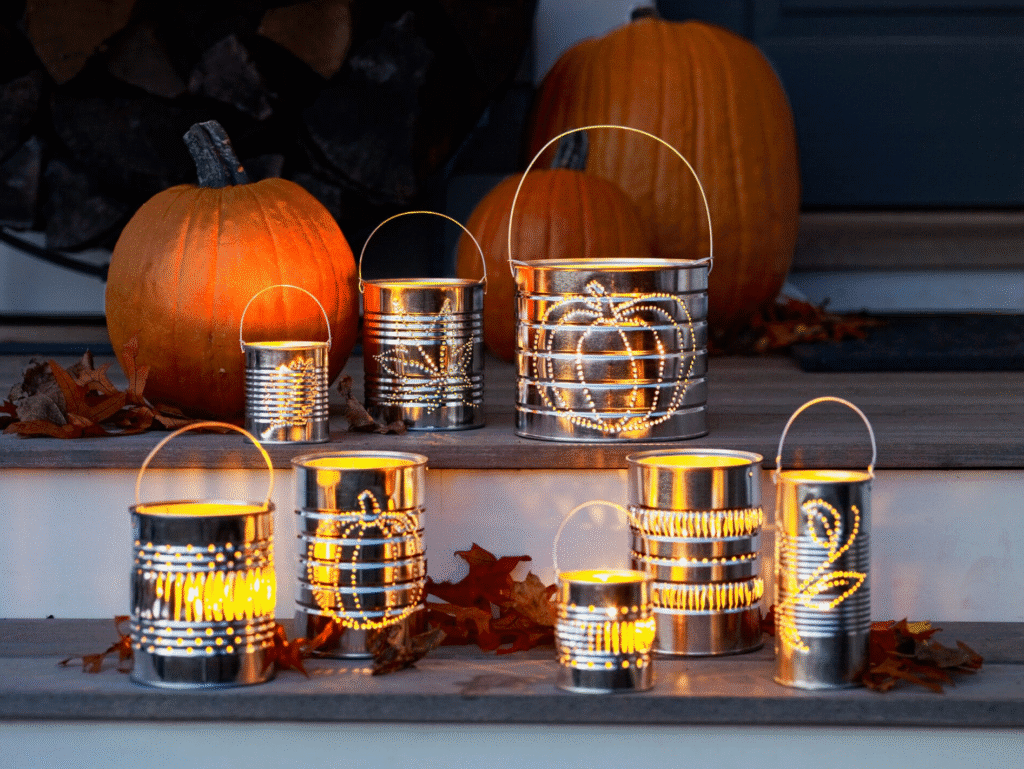
If you choose to paint, select a paint that adheres well to metal. Spray paint labeled for metal surfaces gives an even finish and is convenient for covering multiple cans at once. Apply two to three light coats rather than one heavy coat, letting each layer dry according to the manufacturer’s instructions. For indoor use, standard craft acrylics can work too, but they may require a metal primer for good adhesion. Avoid painting the interior too thickly near the holes so light can still shine out clearly.
You can decorate your lanterns further with:
- Stenciled shapes or letters on the outside
- A contrasting interior color to create a warm glow
- Twine, ribbon, or beads wrapped around the top (keep flammable decorations away from real flames)
If your lanterns will live outdoors, consider a clear protective spray suitable for metal and exterior use. This can help slow down rusting, although it will not prevent it entirely in wet climates. Based on real-world testing on balconies and porches, I have found that storing lanterns indoors when not in use is the most effective way to extend their life and keep paint looking fresh.
Light Sources: Safe, Cozy Options for Tin Lanterns
Choosing the right light source is key to getting that cozy glow while keeping the project safe and practical. For most people, LED candles or LED tea lights are the best option. They stay cool to the touch, last a long time on a single battery, and are safe around children and pets. Modern LED candles often flicker realistically, which enhances the charm of your homemade tin lights. In my experience, a warm white LED around 2700 K to 3000 K gives the most inviting, candle-like effect.
If you prefer real flames, use quality tealights or votive candles placed in a glass holder inside the can. Always:
- Set lanterns on nonflammable surfaces
- Keep them away from curtains, paper decorations, and dry plants
- Avoid crowded tabletops where sleeves or napkins can brush against the flame
Never leave real candles burning unattended, and keep a safe distance between multiple lanterns to avoid accidental tipping. For outdoor gatherings, remember that wind can blow flames sideways, so place lanterns in more sheltered spots if you insist on using flame instead of LEDs.
You can also experiment with micro LED string lights, especially for larger coffee cans or clusters of smaller cans. Thread a short strand inside each can, leaving the battery pack accessible at the back or through a larger opening. Based on my past work with clients setting up temporary event decor, battery-powered fairy lights are incredibly flexible for up-cycled tin-can lighting and can transform a row of cans into a twinkling centerpiece or pathway feature without any open flames at all.
Style Your Tin Can Lanterns Indoors & Outdoors
Now that your up-cycled tin can lanterns are finished, it is time to put them to work creating cozy, intimate lighting. Indoors, try grouping three to five lanterns of different heights on a tray in the living room or dining area. The varied perforation patterns will cast layered shadows on nearby walls. For small apartments, a row of tin lights on a windowsill can add instant evening charm without taking up precious floor space. From hands-on projects, I have found that odd-number groupings feel more visually balanced than even-number groupings.
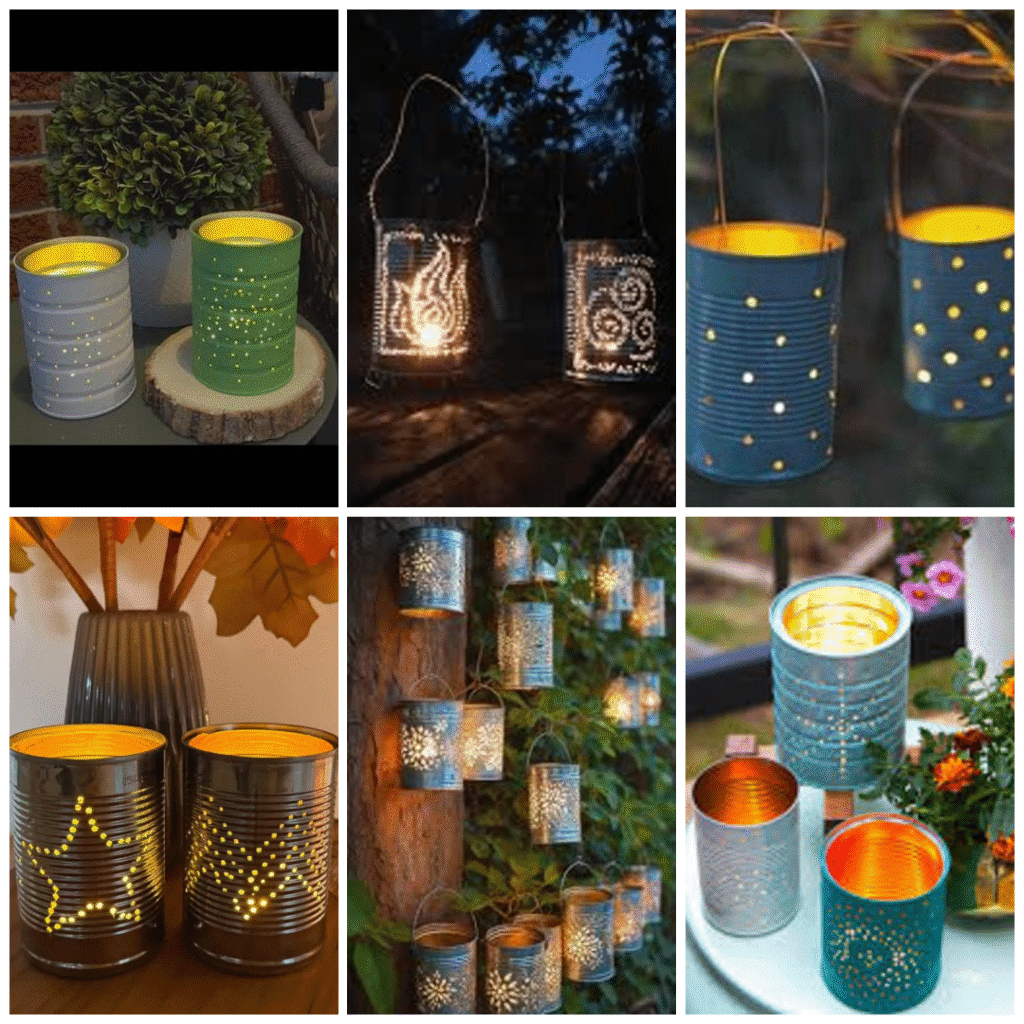
Outdoors, tin can lanterns are ideal for patios, balconies, and garden paths. You can set them along the edge of steps, hang them from sturdy tree branches, or attach them to fence hooks. If you live in a windy or rainy climate, test placement on a calm day first, and always use LED lights for exposed locations to avoid flame hazards. Pathway lanterns should sit where they will not become trip obstacles; placing them just outside the walking line usually gives safe, pleasant illumination.
For seasonal decorating, change paint colors and accents instead of remaking lanterns from scratch. Some ideas include:
- Soft pastels and floral cutouts for spring
- Nautical blues and star patterns for summer evenings
- Warm copper, rust, and leaf motifs for autumn
- Metallic silver, gold, and snowflake patterns for winter and holidays
Based on real-world styling sessions, I have noticed that people appreciate decor they can refresh rather than replace. By repainting and re-styling the same sturdy cans, you keep waste low while still enjoying fresh looks through the year.
Design, Punch & Finish Your Up-cycled Tin Lights
Bringing all the steps together, it helps to think of each lantern as a mini design project with three phases: planning, building, and finishing. In the planning phase, you choose your can size, pattern style, and final color scheme. Sketch ideas in a notebook or on scrap paper first, especially if you plan a set of coordinated lanterns for a shelf, mantle, or outdoor table. In my experience working on similar projects, this small bit of upfront design work leads to more cohesive and impressive results.
The building phase covers freezing, punching, and adding structural details like handles or hanging loops. Work at a comfortable pace, giving yourself time to refreeze cans if they thaw too quickly. It is better to make a few well-crafted lanterns that you truly love than to rush through a large batch that ends up uneven or dented. Use this stage to refine your technique with the hammer and nail, experimenting with how close you can space holes without weakening the can.
Finishing touches bring out the character of your tin lights. Paint, protective sealant, and decorative add-ons like stencils or metallic wax can turn simple cans into personalized decor. You can even label the bottom of each lantern with the date or the occasion, such as “Summer Party 2025,” to remember when you created them. From hands-on work with DIY enthusiasts, I have found that people feel more connected to decor they helped design and craft. These up-cycled tin-can lanterns become not only cozy DIY lighting but also meaningful keepsakes.
Care, Storage & Long-Term Use Tips
To enjoy your tin can lanterns for many seasons, a bit of care and maintenance is helpful. After each use, especially outdoors, check for moisture or dirt inside the cans. Wipe them dry with a cloth to slow down rusting. If you used real candles, remove any wax drips promptly, as thick wax can block light and attract dust. For LED lights, take out batteries during long storage periods to prevent leaks that might damage the electronics.
Store lanterns in a dry place away from direct sunlight to protect painted finishes. A simple cardboard box with tissue or old towels between each lantern works well. Based on real-world testing in humid climates, I have seen that even painted cans can develop surface rust over time, particularly at drill holes and edges. This is normal for metal exposed to air and moisture. Some people even like the aged, rustic patina that appears gradually. If you prefer a fresh look, touch up paint and sealant as needed.
If any edges feel sharp, especially around punched holes or the rim, sand them lightly before the next use. Safety should always come first when working with metal, candles, or any heat source. With LED lighting, overall risk is much lower, but handles, hanging hooks, and surfaces should still be checked for stability. From my experience, a quick inspection before each use prevents most accidents and helps your up-cycled tin lights remain a safe, cozy feature in your home.
Conclusion: Enjoy the Glow of Your Up-cycled Creations
Up-cycled tin can lanterns prove that cozy, atmospheric lighting does not have to be expensive or complicated. With a few saved cans, simple tools, and your own creativity, you can design personalized tin lights that turn everyday spaces into warm, inviting retreats.
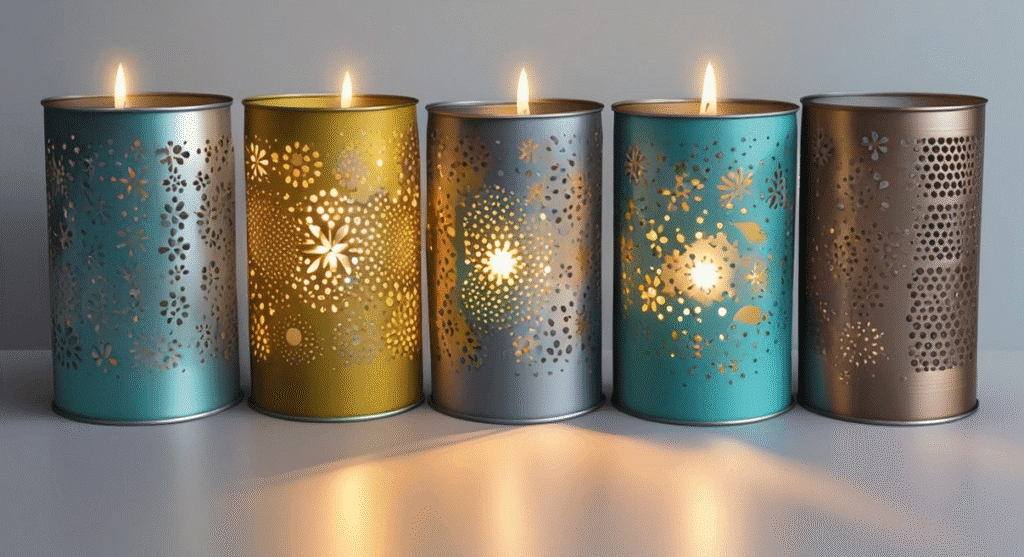
By walking through every step from cleaning and freezing to punching, painting, and styling, you now have a complete road-map for making your own DIY lanterns. Start with one or two simple designs, then build a collection over time that suits different seasons and occasions. Based on hands-on projects and real-world use, these little lights are surprisingly versatile, easy to refresh, and deeply satisfying to create.
Most importantly, your up-cycled tin can lanterns carry a story. Each pattern, paint color, and tiny punched star reflects your taste and the time you spent crafting. Whether you line them along a garden path, cluster them on a table, or gift them to friends, you are not only adding cozy illumination but also practicing thoughtful, sustainable creativity that brightens both your home and the planet.

Maira Lindey is a home decor enthusiast who loves transforming ordinary spaces into warm, stylish havens. Through her writing, she shares simple, creative ideas that help people make their homes both beautiful and comfortable. Her approach combines aesthetic charm with practical solutions for everyday living.
With years of experience experimenting with colors, textures, and layouts, Maira enjoys guiding readers to express their personality through home design. She believes that even small changes can have a big impact, and she focuses on tips that are easy to implement without overwhelming the space or the budget.
Beyond decorating, Maira finds inspiration in nature, art, and everyday life. She encourages her readers to embrace creativity and make spaces that feel uniquely theirs, blending functionality with style in ways that are both inviting and livable.