Industrial-chic pipe DIYs turn old plumbing into bold, functional decor. This guide walks you through stylish, practical ways to repurpose reclaimed metal pipes into modern home features and furniture.
Reclaimed metal pipes can instantly introduce industrial charm, structure, and character into a home when used thoughtfully. This article explains how to design trendy pipe decor and functional furniture that looks custom, feels sturdy, and respects basic safety and build-quality principles.
Trendy Home Decor Ideas Using Reclaimed Metal Pipes
Industrial-chic decor thrives on contrast: raw metal against warm wood, aged patina next to smooth paint, and visible fittings paired with soft textiles. Reclaimed metal pipes are ideal for this look because they already carry history, texture, and a sense of utility. When you repurpose plumbing pipes, you get a structural material that is strong, modular, and relatively easy to assemble with the right connectors. You can create decor that feels both sculptural and practical, from wall-mounted features to standing displays.
In my experience working with reclaimed materials, the most successful pipe decor projects start with one clear visual idea, such as a continuous line that wraps a wall or a grid that frames art and plants. Once you have that core idea, you can adapt it to your space by adjusting height, width, and number of connection points. Reclaimed pipe decor should enhance the room, not overwhelm it, so plan the layout carefully with painter’s tape on the wall or floor before drilling or cutting.
Because reclaimed pipes may have surface rust, paint residue, or oil, you need to prep them before bringing them indoors. At a minimum, clean each piece with a degreaser, then lightly sand away flakes and sharp edges. If you want to preserve a weathered finish, use a clear matte sealer instead of paint. For pipes that will be touched often, like handrails or coat racks, a smoother finish and rounded edges are safer and more comfortable for everyday use.
Crafting Functional Furniture from Old Plumbing Pipes
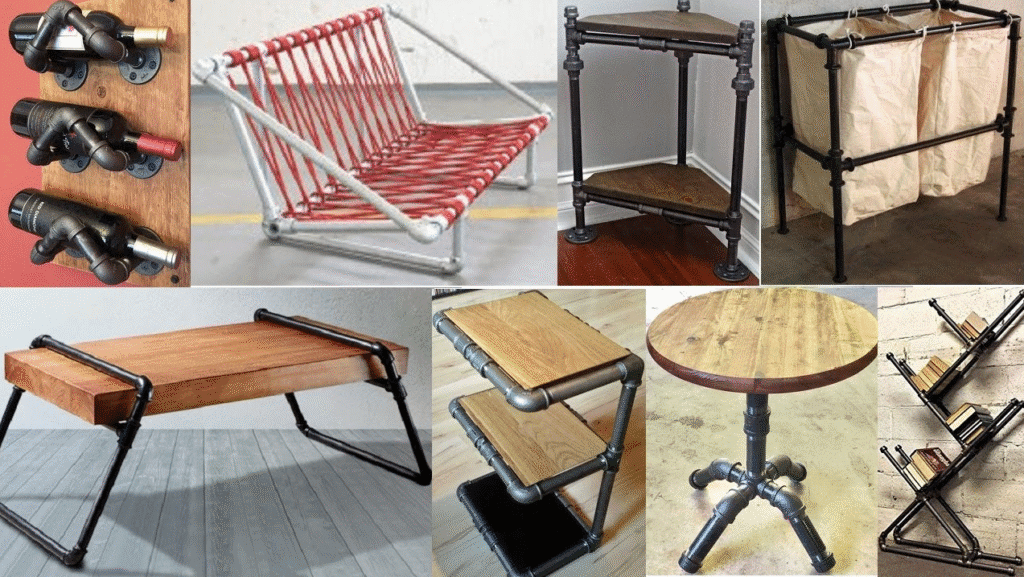
Reclaimed metal pipes can form the structural skeleton of tables, desks, benches, and even bed frames. The key is to treat them as a modular framing system and pair them with sturdy surfaces such as solid wood, plywood with edge banding, or thick MDF sealed for protection. Standard threaded fittings allow you to create stable rectangles and cross braces, which are essential for preventing wobble. For most furniture, using at least 3/4 inch or 1 inch diameter steel pipes gives a better balance between strength and weight.
From hands-on builds, I have found that pipe-based furniture feels most stable when each leg has at least one lateral connection to another leg, forming a rigid rectangle or triangle. This is especially important for dining tables, desks, and shelving units that will hold heavy loads. Add rubber or felt feet to the bottom of each leg to distribute weight and protect floors. For large pieces such as bed frames, always check that the total weight capacity fits your mattress and intended number of sleepers and that you have enough center supports.
When using reclaimed plumbing, verify that the pipe is structurally sound and not severely corroded. Surface rust can be cleaned and sealed, but deep pitting or thin spots are a risk for long-term load-bearing projects. It is reasonable for a properly braced pipe frame to support common household loads, but avoid using compromised pipes for critical structural pieces. If in doubt, reserve heavily corroded sections for purely decorative features or light-duty furniture like side tables and plant stands.
Planning Your Industrial-Chic Pipe Projects
Before cutting or assembling anything, map out your reclaimed pipe DIYs room by room. Look at where you need storage, display, or visual interest, then decide which pieces make the most impact. For example, a single long pipe shelf over a sofa can be more effective than many small scattered pieces. Sketch each project with basic measurements and a list of fittings, such as elbows, tees, flanges, and couplings. Planning reduces mid-project trips to the hardware store and prevents mismatched thread sizes.
In my experience working on similar projects, making a scale drawing on graph paper or using a simple design app helps you catch issues like doors hitting pipes, windowsills blocking brackets, or furniture blocking vents. For any wall-mounted project, identify stud locations early with a stud finder. Reclaimed pipes and wood shelves can get heavy, and drywall anchors have limited capacity, so whenever possible, tie brackets directly into studs for security and longevity.
Budgeting ahead also matters. While reclaimed pipes may be inexpensive or even free, the cost of fittings, sealants, screws, and wood surfaces can add up. To keep projects affordable:
- Prioritize high-impact pieces like a statement shelving unit or entry console.
- Use reclaimed or offcut lumber for shelves and tops.
- Keep designs modular so you can expand them later.
Planning for both aesthetics and cost ensures the final result looks intentional instead of improvised.
Building Pipe Shelving and Display Units
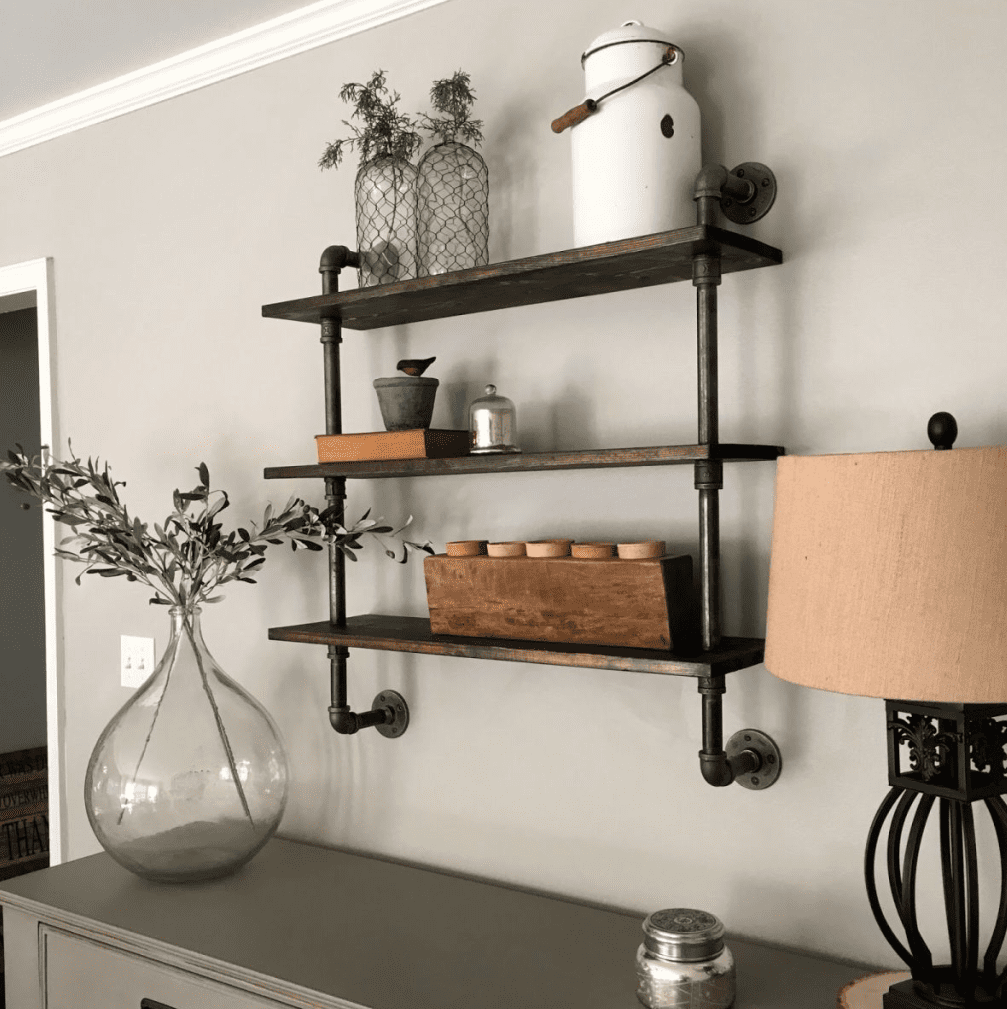
Pipe shelving is one of the most popular industrial-chic DIYs because it combines visible structure with useful storage. You can build:
- Floor-to-ceiling wall shelves fixed into studs.
- Floating-style shelves using vertical and horizontal pipe supports.
- Freestanding units anchored with wide bases for stability.
Based on real-world builds, wall-mounted pipe shelves feel safest when vertical uprights are fastened to at least two studs and each shelf has two or more attachment points. Use solid wood in the range of 1 to 1.5 inches thick for most residential shelving, and secure wood to pipe flanges with appropriate screws. Leave enough clearance between shelves for books, baskets, or decor, typically 10 to 14 inches for general use.
Add design details that highlight the industrial aesthetic without losing function. You can:
- Leave pipe visible at shelf edges to frame objects.
- Use caps on open pipe ends for a clean, finished look.
- Mix metal finishes, such as matte black pipe with warm brass accessories.
From hands-on work with clients, I have found that finishing wood shelves with a clear matte or satin polyurethane lets the grain show while protecting against scratches and moisture marks, especially in kitchens and bathrooms.
Creating Pipe-Based Lighting and Wall Features
Reclaimed metal pipes can form striking light fixtures, such as wall sconces, pendant frames, or minimalist chandeliers. For safety, any hard-wired lighting should comply with local electrical codes and, if you are not fully confident with electrical work, be handled or checked by a qualified electrician. Pipes make excellent channels for wiring, but they must not have sharp edges that could abrade insulation. Use threaded fittings and strain relief where cords exit the metal.
In my experience experimenting with pipe lighting, the most successful fixtures keep the wiring simple and focus on the graphic lines of the metal. For example:
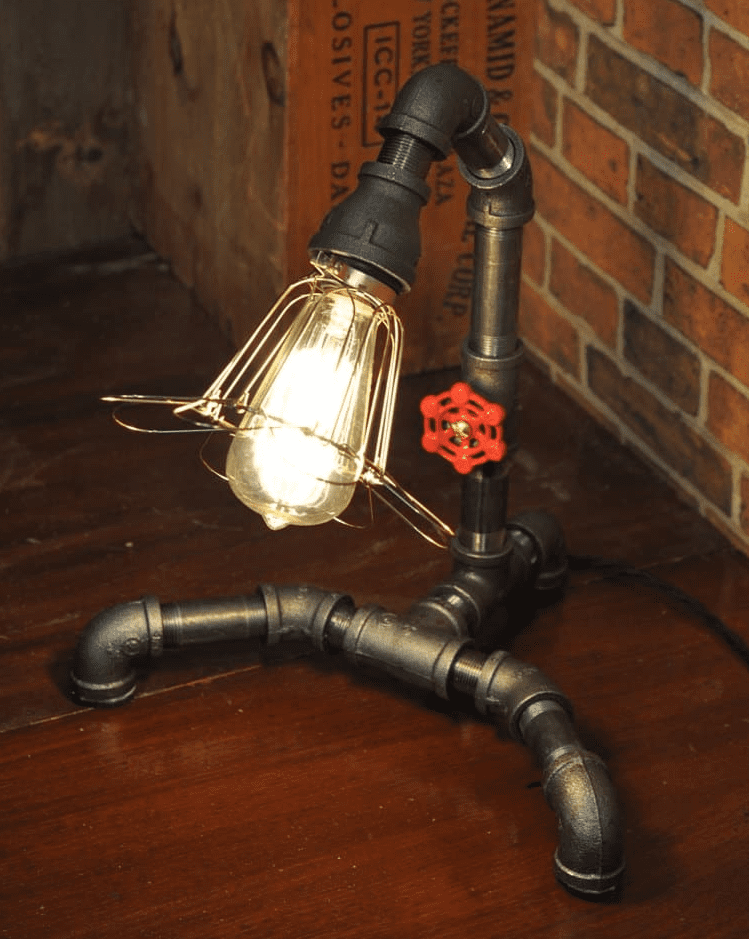
- A vertical pipe mounted to a wall with a 90-degree elbow and a socket at the end.
- A linear chandelier that uses several tee fittings to branch multiple bulbs.
- A floor lamp where a heavy base and vertical pipe support an adjustable arm.
For general living areas, warm white bulbs in the 2700K to 3000K range typically create a comfortable glow, while task areas like desks can benefit from 3000K to 3500K neutral white.
Beyond lighting, pipes can form wall features such as:
- Gallery rails for hanging framed art with hooks and cables.
- Pegboard alternatives using horizontal pipes and S-hooks.
- Wall-mounted coat racks and hat rails.
When building these pieces, ensure the mounting hardware matches both the wall type and expected load. For example, a coat rack should be anchored into studs or use heavy-duty wall anchors, especially if it may hold heavy winter coats and bags.
Transforming Pipes into Storage and Organization Solutions
Reclaimed plumbing pipes excel as organizers for entryways, closets, offices, and kitchens. The cylindrical shape is perfect for:
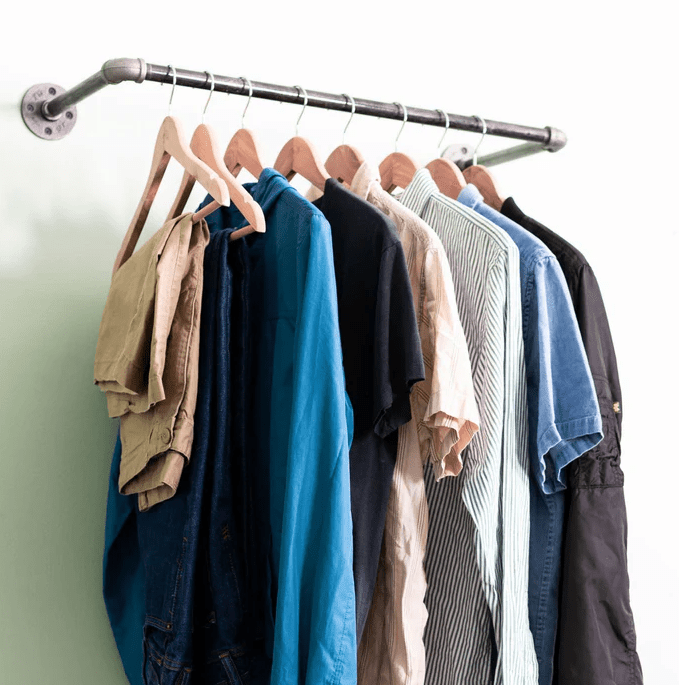
- Clothing rods in open wardrobes or walk-in closets.
- Towel bars and bathroom storage ladders.
- Kitchen pot racks and utensil rails with hooks.
- Garage or workshop tool racks.
From hands-on projects, I have found that pipe closet rods feel best at about 66 to 70 inches above the floor for standard hanging clothes, with at least 24 inches of width per person for everyday items. For towel bars, ensure enough space between bars so towels can air dry; 10 to 12 inches of vertical separation usually works for full-size bath towels. Always double-check that bathroom pipe pieces are thoroughly cleaned and sealed, since residual oils or rust could stain fabrics over time.
Pipe-based storage can also act as a design feature. Consider combining:
- Black iron pipe with rustic reclaimed wood for a farmhouse-industrial look.
- Brushed or galvanized pipe with light wood for a modern minimalist feel.
- Painted pipe in bold colors with neutral walls for a playful, contemporary effect.
To avoid visual clutter, keep the number of visible fittings reasonable and align pipes carefully so they look intentional rather than haphazard.
Designing Seating, Tables, and Workstations with Pipes
Tables and seating built from reclaimed pipes can anchor a room with a strong industrial presence. Common projects include:
- Dining tables with pipe frames and reclaimed wood tops.
- Bar-height tables or breakfast bars attached to walls.
- Benches for entryways or dining nooks.
- Standing desks or workbenches with adjustable feet.
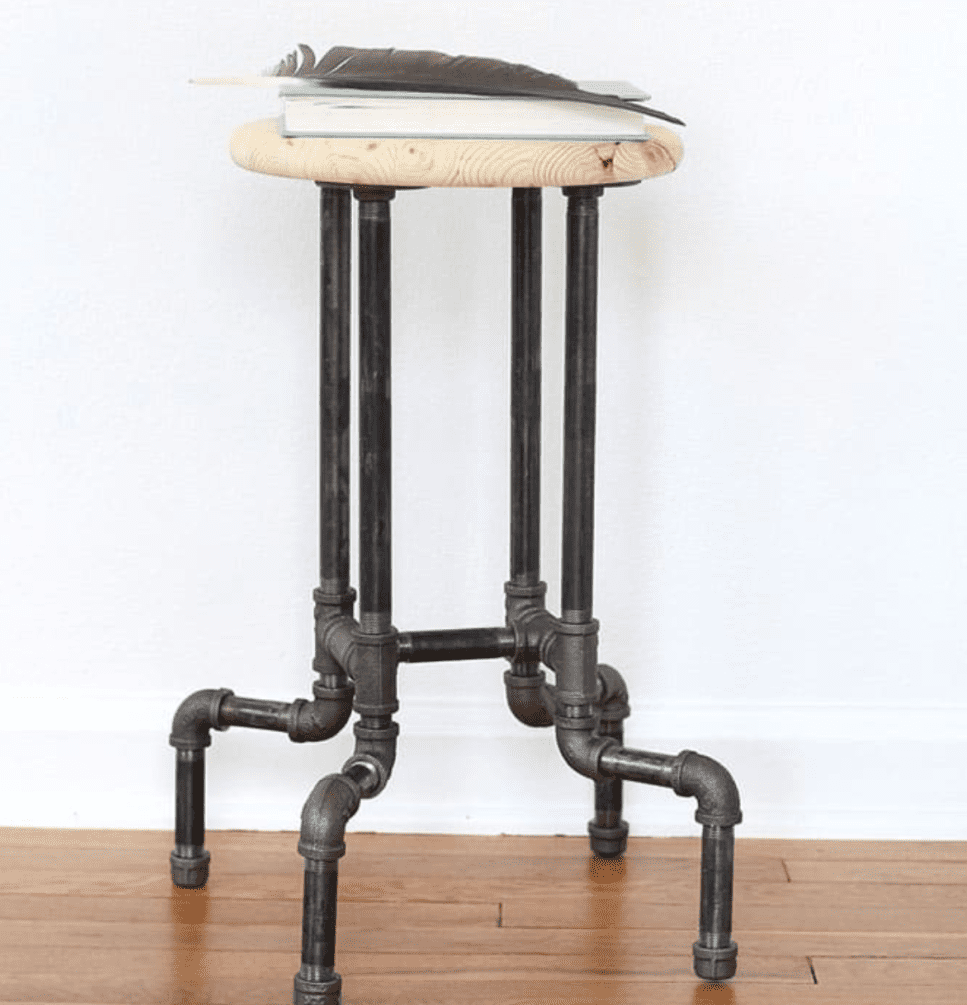
Based on my past work with clients, comfortable table heights are usually around 29 to 30 inches for dining, 36 inches for counter-height, and 40 to 42 inches for bar-height. Standard bench heights range from 17 to 19 inches. When building pipe frames, use cross braces between legs to prevent lateral movement and test stability before permanently fastening the top. If you plan to move heavy pipe furniture, design it in sections that can be disassembled.
Workstations benefit from thoughtful cable management and ergonomics. For example:
- Add horizontal pipes under the desktop to hold cable trays.
- Use pipe-mounted monitor stands to free desk space.
- Install adjustable feet or casters rated for the total weight.
For standing or adjustable-height desks, make sure all connections are tightened securely and periodically check fittings, since motion can gradually loosen threaded joints. Locking thread sealants or set screws can help keep critical joints from rotating unexpectedly.
Finishing, Safety, and Maintenance for Reclaimed Pipes
Good surface preparation and finishing significantly improve the look and longevity of reclaimed pipe projects. At a basic level:
- Clean with a degreaser or detergent to remove oils and grime.
- Use a wire brush and sandpaper to knock down rust and sharp spots.
- Wipe dry thoroughly to prevent new rust before sealing or painting.
For a raw industrial look, a clear matte spray or oil-based sealer can protect metal while preserving patina. For a more polished finish, use metal primer followed by spray paint formulated for metal surfaces.
From real-world testing, I have found that black iron pipe can sometimes have an oily factory coating that transfers to hands and fabrics if not removed. Taking time to fully degrease and seal prevents stains on walls and textiles. For projects near moisture such as kitchens and bathrooms, galvanized or stainless pipe is more resistant to corrosion than standard steel, but all metal can eventually show some wear in humid environments. Regularly inspect for rust and touch up finishes as needed.
Safety is essential, especially if children or pets are in the home. Keep these guidelines in mind:
- Avoid sharp cut ends by using caps or filing them smooth.
- Ensure heavy wall-mounted pieces are properly anchored.
- Do not overload shelves or hanging storage; stay within conservative weight estimates.
- Treat any lighting project involving hard wiring with caution and use a qualified electrician if unsure.
With regular cleaning and basic checks of screws and fittings, well-built pipe decor and furniture can remain safe and attractive for many years.
Sustainable Sourcing and Upcycling Best Practices
Sourcing reclaimed metal pipes responsibly enhances the environmental value of your DIYs. Potential sources include:
- Demolition sites and renovation projects where old plumbing is being removed.
- Salvage yards and architectural reuse stores.
- Online marketplaces where contractors sell surplus materials.
Always ask for permission before taking materials from job sites and follow any local rules about salvaging building components.
In my experience working with reclaimed materials, it is smart to visually inspect and, if needed, measure pipe wall thickness before committing to heavy-duty projects. Avoid pipes that show signs of severe corrosion, contamination, or unknown chemical exposure. When in doubt, reserve questionable pieces for purely decorative use that does not involve contact with skin, food, or water. If pipes have been used for gas lines, ensure they are fully purged and well ventilated during cleaning.
Upcycling is most impactful when you preserve the character of old materials while extending their life. Consider documenting the origin of your reclaimed pipes, especially if they come from a building with history, and share that story with guests. It adds emotional value to the project and highlights the environmental benefit of reusing materials rather than sending them to scrap. Combined with thoughtful design, this approach turns your industrial-chic pipe projects into conversation pieces that celebrate sustainability.
Conclusion
Reclaimed metal pipes give DIYers a rare combination of strength, flexibility, and visual character that fits perfectly with industrial-chic design. With basic planning, safety awareness, and respect for the materials, you can turn tired plumbing into durable decor and furniture that looks custom-made and expresses your style.
By exploring pipe shelving, lighting, storage, and furniture, you can gradually build a cohesive industrial look without rebuilding your entire home. Start with small projects to learn how fittings work, then move on to larger pieces like desks, dining tables, and full-height shelving. In my experience, the most satisfying results come from designs that balance raw metal with warm surfaces, clear function, and personal touches like reclaimed wood or meaningful objects.
As you source, clean, and assemble each piece, remember that reclaimed materials are inherently imperfect. Lean into that character, protect it with thoughtful finishing, and maintain each project with occasional checks and touch-ups. Over time, your home can evolve into a layered, industrial-chic space where every pipe tells part of the story.

Maira Lindey is a home decor enthusiast who loves transforming ordinary spaces into warm, stylish havens. Through her writing, she shares simple, creative ideas that help people make their homes both beautiful and comfortable. Her approach combines aesthetic charm with practical solutions for everyday living.
With years of experience experimenting with colors, textures, and layouts, Maira enjoys guiding readers to express their personality through home design. She believes that even small changes can have a big impact, and she focuses on tips that are easy to implement without overwhelming the space or the budget.
Beyond decorating, Maira finds inspiration in nature, art, and everyday life. She encourages her readers to embrace creativity and make spaces that feel uniquely theirs, blending functionality with style in ways that are both inviting and livable.