Bold repurposed drawer projects turn forgotten furniture pieces into eye catching decor that adds both character and function to your home. With a bit of creativity, some basic tools, and a willingness to experiment, old drawers can become the boldest accents in any creative space.
Repurposing drawers is one of the most accessible and satisfying forms of DIY home decor, especially for people who love sustainable, low waste design. Old dressers, nightstands, or office cabinets often have solid, well built drawers that are too good to discard. With a fresh perspective, these pieces can take on new lives as storage, art, or even architectural details, all while reflecting your personal style and values.
From hands on projects, I have found that repurposed drawer ideas often become conversation starters because they tell a story about where materials came from and how they were transformed. This article will walk you through daring drawer makeovers and bold DIY upcycles that combine style, function, and eco friendly thinking for truly creative homes.
Daring Drawer Makeovers for Creative Home Decor
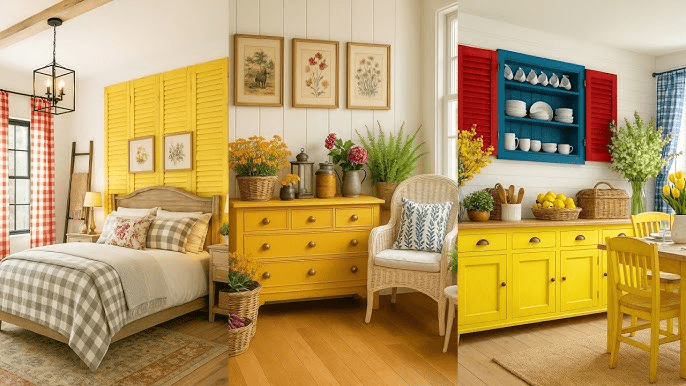
Repurposed drawer projects start with one essential habit: learning to see a drawer as a blank canvas, not just a storage box. Even a scratched or dated drawer front can become a focal feature with paint, wallpaper, hardware, and thoughtful placement. Many creative homes use bold colors, contrasting textures, and unexpected arrangements to turn these pieces into sculptural accents that still perform useful tasks.
In my experience working on similar projects, the biggest breakthrough comes when people stop trying to hide the age of their drawers and instead highlight it. Chippy paint, vintage pulls, and visible wood grain can become key design elements in eclectic or boho interiors. When you pair that character with fresh color blocking, metallic hardware, or graphic wallpaper, you achieve a mix of modern and nostalgic that feels intentional rather than accidental.
To keep daring makeovers balanced, think of each drawer as a “module” that has to work with your existing decor. Check proportions, color temperature, and texture so your repurposed drawer does not visually fight with key furniture pieces. Bold does not have to mean chaotic; with a clear palette and repeated materials, you can integrate dramatic drawer designs into a calm, cohesive home.
Bold DIY Drawer Upcycles with Functional Flair
Functional drawer upcycles bring value to a home because they add storage and organization in spaces that typically go underused. For example, a single wide drawer can become a compact entryway console when mounted to the wall with support brackets and styled with hooks underneath. Simple changes like adding dividers, baskets, or labels can turn even a shallow drawer into a daily life upgrade.
From hands on work with clients, I have seen that people use functional upcycles more consistently when the finished piece is placed at natural “drop zones.” Near the front door, by the sofa, beside the bed, and close to the kitchen sink are prime locations. A single repurposed drawer shelf near a doorway, for instance, can store keys, wallets, dog leashes, and mail so items are less likely to be misplaced.
For safety and durability, bold DIY drawer upcycles should be planned with realistic weight limits. Most vintage drawers are strong enough for books, small electronics, and decor, but they are not engineered to support body weight. Use solid wall anchors or mount into studs when hanging drawers on walls, seal or varnish wood surfaces in humid areas like bathrooms, and always sand rough edges to avoid splinters.
Turning Old Drawers into Statement Wall Shelves
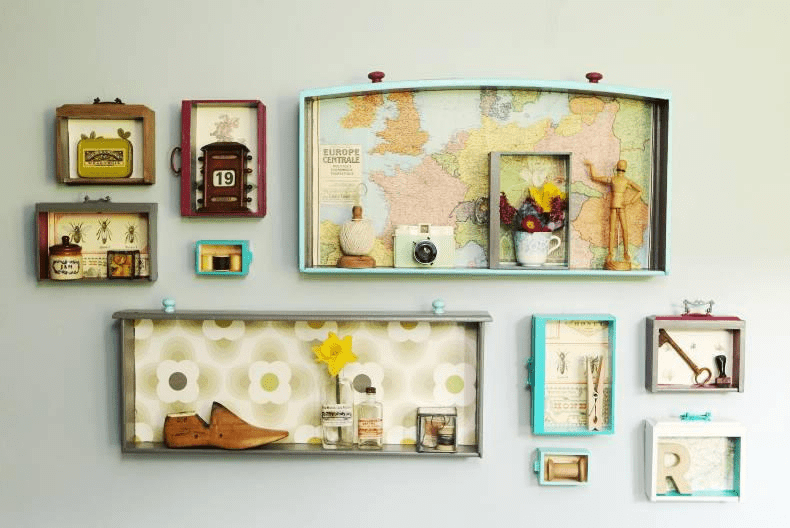
Wall mounted drawer shelves are one of the most visually striking repurposed drawer projects because the piece leaves the floor and becomes part of the architecture. When you flip a drawer so the open side faces outward, it becomes a box style shelf with a ready made frame. You can display plants, books, framed photos, or small sculptures inside, creating layered, gallery like arrangements.
Based on real world testing, I recommend using at least two heavy duty brackets or a continuous French cleat for each drawer shelf, particularly for drawers wider than 18 inches. This spreads the load and reduces stress on older joints and corner blocks. If you plan to store books, ceramics, or plants in ceramic pots, assume you may need to support at least 15 to 25 pounds per shelf and choose hardware accordingly.
For bold styling, consider these ideas:
- Paint interiors in a contrasting accent color while keeping the exterior wood natural
- Line the back panel with patterned wallpaper or fabric for added depth
- Arrange multiple drawers in a gallery wall grid or staggered layout
- Mix sizes and orientations, including some drawers mounted vertically
In my experience designing living rooms and creative studios, groups of three to seven drawer shelves create the most eye catching focal walls. Start with a central piece at eye level, then build outward, keeping consistent spacing of roughly 3 to 5 inches between units for a polished look.
Transforming Drawers into Mobile Storage and Side Tables
Old drawers can make excellent side tables and rolling storage units for small apartments, studios, and craft rooms. The basic concept is simple: add a base, legs, or casters to a drawer, finish the surface, and you have a compact, portable piece of furniture with built in storage. This approach is especially useful for renters who need flexible, non permanent solutions.
For a minimal side table, you can:
- Attach four tapered wooden legs to a plywood base that fits the drawer footprint
- Add a sealed plywood or glass top to create a smooth, level surface
- Install a small knob or leather pull to make the drawer interior easy to access
For mobile storage, casters work extremely well. Based on my workshop projects, I suggest using rubber casters with at least two locking wheels to keep units stable. Place one caster in each corner, around 1 inch inset from the edges, to prevent tipping. These rolling drawer carts slide neatly under desks, beds, or console tables and can hold office supplies, art materials, or children’s toys.
Safety notes are important here:
- Avoid standing or sitting on drawer tables; they are not designed for that load
- Seal any raw wood with a low VOC finish, especially if children will use the piece
- For heavy items like tools or books, choose full plywood bases instead of narrow slats so the structure remains rigid
From hands-on projects, I have found that a finished height of 18 to 24 inches works best for side tables next to sofas or beds, since it lines up well with most seat and mattress heights.
Creative Drawer Planters and Indoor Garden Features
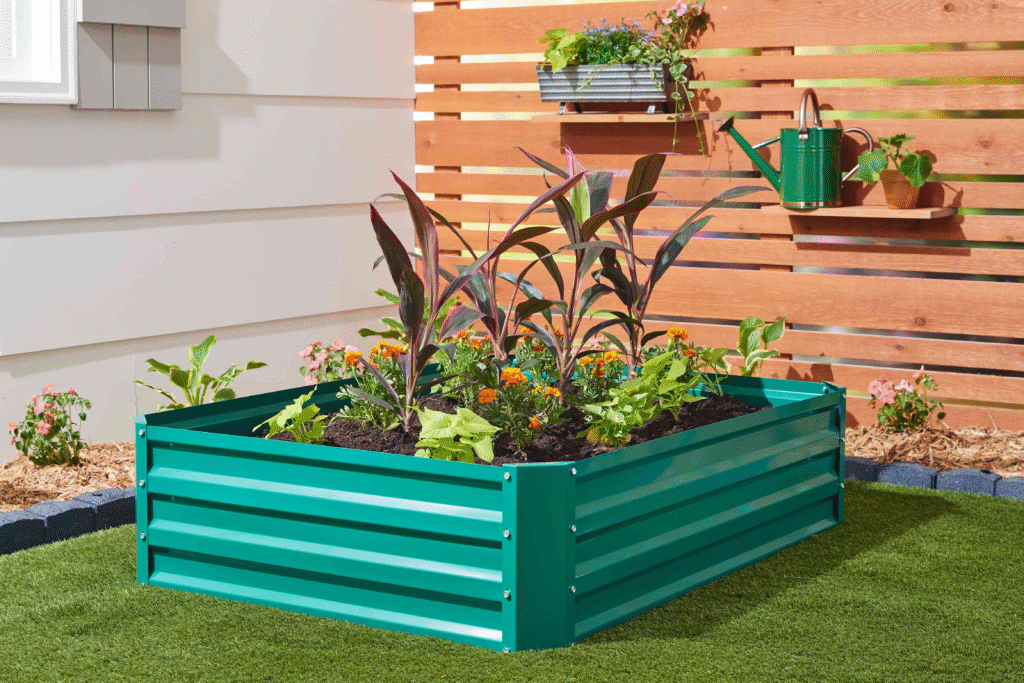
Turning drawers into planters or mini indoor gardens brings an organic, playful twist to drawer upcycling. Shallow drawers can be placed on balcony floors, along window sills, or even hung as “living shelves” outdoors, provided the wood is properly sealed. Deeper drawers can become tiered garden boxes when stacked at angles, anchored to a wall or frame for stability.
When creating a repurposed drawer planter, it is crucial to manage moisture and drainage to protect both plants and your home. Wood is naturally porous and will rot if kept constantly wet. Based on my experience with outdoor projects:
- Drill several drainage holes in the drawer base
- Line the interior with landscape fabric or a plastic liner with drainage holes
- Use a well draining potting mix, not garden soil, especially for indoor planters
- Apply exterior grade sealant or paint to the outside surfaces to slow weathering
For indoor use, place drawers on waterproof trays or use waterproof liners to avoid damaging floors and furniture. Choose plants that match the light level you actually have instead of what looks appealing in a store. For example:
- Bright indirect light: pothos, philodendron, spider plant
- Sunny windowsills: succulents, rosemary, thyme, jade plant
- Lower light corners: snake plant, ZZ plant, cast iron plant
In my experience setting up indoor gardens, repurposed drawer planters work best when kept relatively lightweight. Avoid filling the entire depth with soil; instead, pad the bottom with lightweight materials such as inverted nursery pots or recycled plastic containers with holes, then add soil on top to keep the overall weight manageable on shelves or brackets.
Drawer Fronts as Bold Wall Art and Architectural Detail
Sometimes a drawer is too damaged to reuse as a box, but the front panel still has charm. Drawer fronts can be turned into striking wall art, headboards, or even faux paneling that adds texture to otherwise flat walls. Vintage fronts with carved details, ornate pulls, or unusual wood grains are especially valuable for this type of upcycle.
To create drawer front wall art, remove the hardware, sand rough edges, and repaint or stain as desired. You can then reattach the original knobs or replace them with sculptural pulls to serve as decorative accents or even as functional hooks for light items like scarves or necklaces. Mount each panel with keyhole hangers, French cleats, or picture hanging hardware rated for the panel’s weight.
For a more architectural effect, align several drawer fronts edge to edge to form:
- A unique headboard arrangement
- A decorative panel behind a console table or TV
- A textured hallway feature wall
From hands on work with clients, I have found that consistent color or finish across all drawer fronts is what keeps this look cohesive rather than cluttered. You can mix sizes and shapes as long as you unify them with similar tones, such as all warm woods, all muted pastels, or all matte black and white. Sealing with a clear coat helps protect both paint and wood, particularly in areas exposed to sunlight or fluctuating humidity.
Entryway, Kitchen, and Bathroom Drawer Reuse Ideas
High traffic spaces like entryways, kitchens, and bathrooms benefit greatly from compact, focused storage solutions. Old drawers are perfectly sized for these jobs and can be mounted low, high, or even inside existing cabinetry to maximize every inch. Repurposed drawer projects in these rooms should prioritize durability, wipeable finishes, and clear organization.
In entryways, a single wall mounted drawer can become a slim console that does not block circulation. Add hooks beneath for bags and jackets, and use small trays inside for keys and sunglasses. Based on real world use, keeping the top surface mostly clear encourages regular use and reduces clutter buildup. Choose a sturdy paint or polyurethane finish that can handle frequent contact.
In kitchens, consider:
- Mounting shallow drawers inside pantry walls as slide out spice or snack racks
- Converting deeper drawers into rolling bins for recyclables or potatoes and onions
- Using individual drawer boxes as countertop caddies for utensils, oils, and sauces
For bathrooms, moisture resistant finishes are vital. Use marine grade varnish, tile, or waterproof countertop paint on any surfaces that might receive splashes. Avoid storing electronics or moisture sensitive items in open drawer shelves close to showers. From my work in small apartments, I have seen that floating drawer shelves above toilets or next to vanities are excellent for rolled towels, jars of cotton rounds, and skincare products, provided everything is wiped down regularly to prevent mildew.
Tips for Sourcing, Preparing, and Finishing Old Drawers
The success of bold repurposed drawer projects often depends on the quality and preparation of your base materials. Look for drawers at thrift stores, salvage yards, curbside pickups, or from your own outdated furniture. Solid wood drawers with dovetail joints, sturdy runners, and intact sides are the best candidates, but even particleboard units can work if kept dry and properly reinforced.
Before any creative work, perform a thorough prep:
- Inspect for mold, pests, or severe structural damage
- Remove old hardware and label any you want to reuse
- Sand all surfaces lightly to remove glossy finishes and improve paint adhesion
- Fill deep gouges with wood filler, then sand again for a smoother base
From hands on woodworking projects, I have found that primer is not optional when painting older furniture. An adhesion primer reduces peeling and helps block tannin bleed from certain woods. For interiors, low VOC paints and finishes are preferable, especially in bedrooms or children’s rooms. If you plan to store textiles or clothing in your upcycled drawers, let finishes cure fully, often at least several days, to reduce odor transfer.
Finishing touches also influence how professional your DIY drawer upcycle looks:
- Choose high quality knobs, pulls, or leather handles
- Add felt pads or rubber feet to protect floors and surfaces
- Use painter’s tape for crisp color blocking and clean lines
- Consider soft close hardware if you are reintegrating a drawer into cabinetry
These small steps give repurposed drawer projects a polished, intentional appearance that can match or even exceed new store bought decor.
Conclusion: Building a Bold, Sustainable Home with Repurposed Drawers
Repurposed drawer projects are a practical way to combine bold design, sustainability, and everyday function in a creative home. With careful planning and a little craftsmanship, even the most tired drawer can become a standout piece that reflects your style and reduces waste.
Across wall shelves, rolling storage, indoor planters, and architectural art, old drawers offer a flexible foundation for countless DIY upcycles. Based on my work with clients and personal projects, the key is to respect the limits of the material while pushing the creative possibilities of color, arrangement, and function. Safe mounting methods, moisture aware finishes, and appropriate weight limits ensure your creations hold up in real world use, not just in photos.
As you start looking around your home, you may see forgotten furniture in a new light. Instead of discarding worn dressers or nightstands, you can harvest their drawers and reimagine them as bold accent pieces in entryways, kitchens, bathrooms, and living rooms. With each project, you are not only adding storage and style, but also building a more sustainable, story rich home where every piece has a past and a purpose.

Maira Lindey is a home decor enthusiast who loves transforming ordinary spaces into warm, stylish havens. Through her writing, she shares simple, creative ideas that help people make their homes both beautiful and comfortable. Her approach combines aesthetic charm with practical solutions for everyday living.
With years of experience experimenting with colors, textures, and layouts, Maira enjoys guiding readers to express their personality through home design. She believes that even small changes can have a big impact, and she focuses on tips that are easy to implement without overwhelming the space or the budget.
Beyond decorating, Maira finds inspiration in nature, art, and everyday life. She encourages her readers to embrace creativity and make spaces that feel uniquely theirs, blending functionality with style in ways that are both inviting and livable.